

Your online store gets decent traffic. You pay for ads, you watch the visitor numbers climb, and the sales barely move. The usual advice is to spend more on ads. Before you do, it’s worth asking a cheaper question: of the people already arriving, how many are leaving without buying, and why?
This post is for owners of New Zealand online stores who want more revenue from the visitors they already pay for. We’ll cover where sales leak out, what’s cheap to fix, and how to tell if it’s working.
The market is growing. Your share isn’t automatic.
NZ Post’s eCommerce Market Sentiments Report, released 11 July 2026 and covering 2025, found that almost one in four dollars of total retail spend in New Zealand is now online. Shoppers made nearly six million more online transactions in 2025 than in 2024, a rise of 6 per cent. The average online order rose 4 per cent to $120 (NZ Post, media release, 11 July 2026).
Two more findings matter to a local store. New Zealand-based retailers took 79.6 per cent of all online spending, and their average order was more than $50 higher than offshore retailers’. And over a quarter of shoppers named NZ-based stores, delivery visibility and easy returns as key reasons for choosing a retailer (NZ Post).
Read that as a brief. Shoppers here are already choosing local, and what tips them is clarity on delivery and returns. Those are things you control without buying a single extra click.
Where sales leak out: the checkout
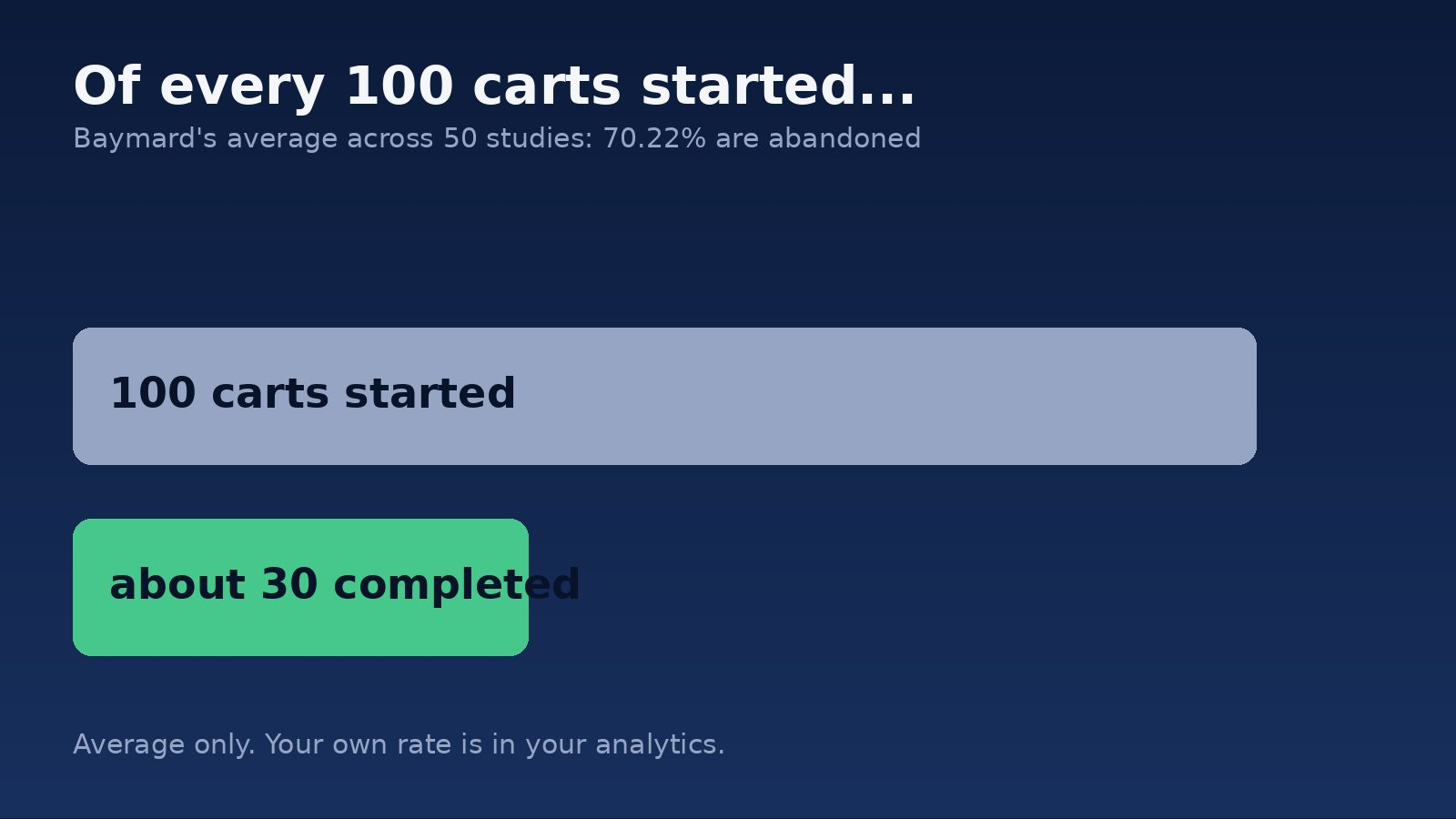
The Baymard Institute, a research firm that studies online checkout, collates abandonment studies. Its list puts the average documented cart abandonment rate at 70.22 per cent, calculated across 50 studies, and was last updated on 22 September 2025 (Baymard Institute, cart abandonment rate statistics). Put plainly, around seven in ten carts are abandoned on average. Some of those shoppers were only browsing, so you won’t recover them all. But Baymard also lists what people say pushed them away:
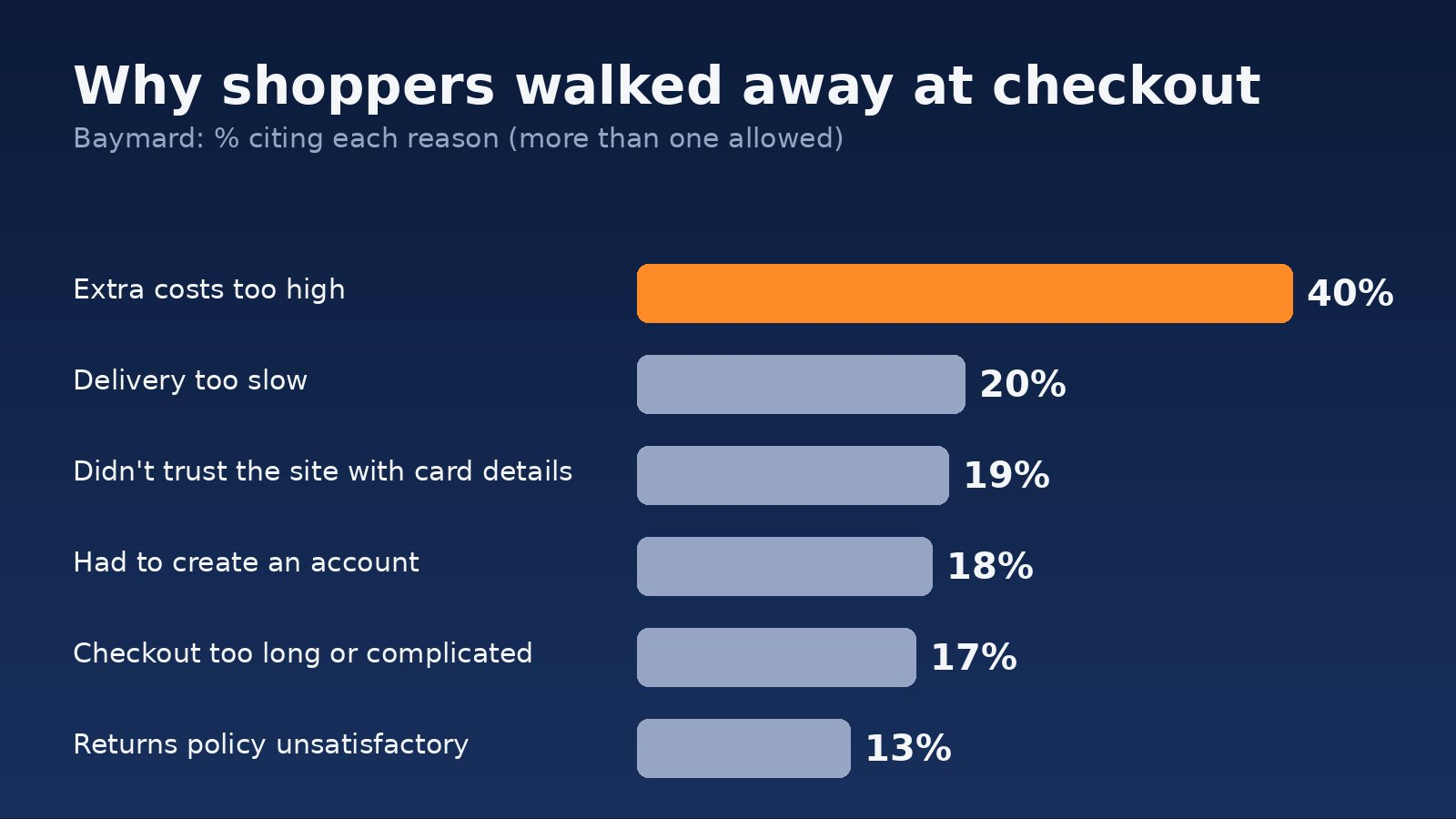
Look at that list as a business owner. Not one item says “your product wasn’t good enough”. Every one is something you can change:
- Extra costs (40%). Shipping, fees and tax appearing late. Show the full price, including delivery, as early as you can. If you offer free delivery over a threshold, say so on the product page, not only at checkout.
- Slow delivery (20%). State delivery times in plain words, by region if they differ. NZ Post’s finding on delivery visibility points the same way.
- Trust (19%). Visible contact details, a real address or phone number, clear payment logos, and a returns page people can find.
- Forced account creation (18%). Offer guest checkout. Let people create an account after they’ve paid.
- A long checkout (17%). Cut every field you don’t need to deliver the order.
- Returns policy (13%). Write it in a few sentences, and link it from the product page.
Baymard’s page doesn’t give a survey date or sample size for this particular breakdown, so treat the percentages as a guide to what matters, not as a forecast for your store. Your own checkout data will tell you more, and we’ll come to how to read it.
Bring back people who left
Someone who put an item in the cart and left has told you they wanted it. An automatic email reminding them is among the cheapest sales you can make, because you’ve already paid for the visit.
Klaviyo, an email and text platform, published benchmarks drawn from more than 110,000 of its customers on 2 October 2026. It reports that abandoned cart flows drive the highest average revenue per recipient of all the automated flows it measured: $6.77 for email and $4.48 for text messages. The average email click rate for that flow is 6 per cent (Klaviyo, abandoned cart benchmarks).
Be careful with those numbers. They come from a vendor describing its own customers, the page doesn’t state the currency or how revenue per recipient is calculated, and it doesn’t report how many recipients actually buy. They show that these emails are worth setting up. They don’t promise what yours will earn.
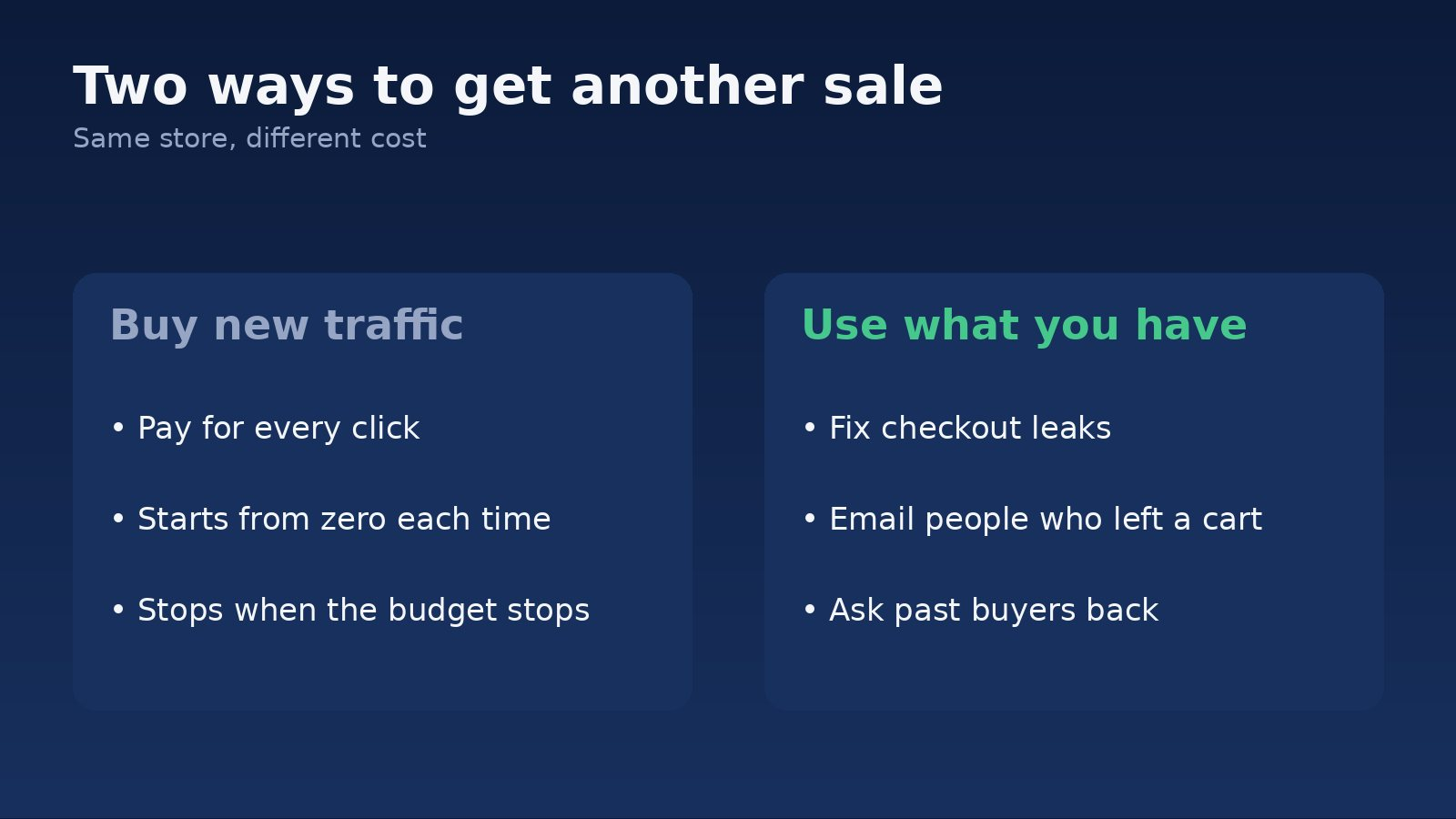
A sensible reminder sequence is short. One email within a few hours, a second the next day, and perhaps a third a couple of days later. Keep each one specific: the product they left, a clear picture, delivery and returns in one line, and a single button back to the cart. Avoid discounting by reflex. If you teach customers that abandoning a cart earns a discount, many will do it on purpose.
The same logic applies to people who’ve already bought. A short email a few weeks after delivery, asking for a review or suggesting a refill or a matching item, costs almost nothing compared with finding a new customer from scratch.

Show up for free where you can
Paid ads aren’t the only way a product gets found. Google says products from merchants can appear in free listings on the Shopping tab and in other Google places, at no cost. Google is careful to say that products “may show” there, not that they will, and that you need to meet its policies and supply product details such as price, availability, shipping and return information (Google Merchant Center Help, free listings).
Google’s page doesn’t list which countries have the Shopping tab free listings live, so check inside Merchant Center whether they apply to New Zealand before you count on them. Even so, a clean product feed, accurate prices and clear return information is work that also helps your paid shopping ads later.
Make your reviews easy to find
NZ Post’s report found that more than half of shoppers search for independent reviews, external ratings or real shopper feedback before buying. If you’re asking a first-time buyer to trust a card payment with a store they haven’t heard of, proof from other customers is doing real work.
Ask every buyer for a review a couple of weeks after delivery. Show real ones on the product page. Reply to the unhappy ones politely and specifically. Never write your own or buy them: it’s against the rules of the platforms and, in New Zealand, a legal risk as well.
A five-minute check before you spend more on ads
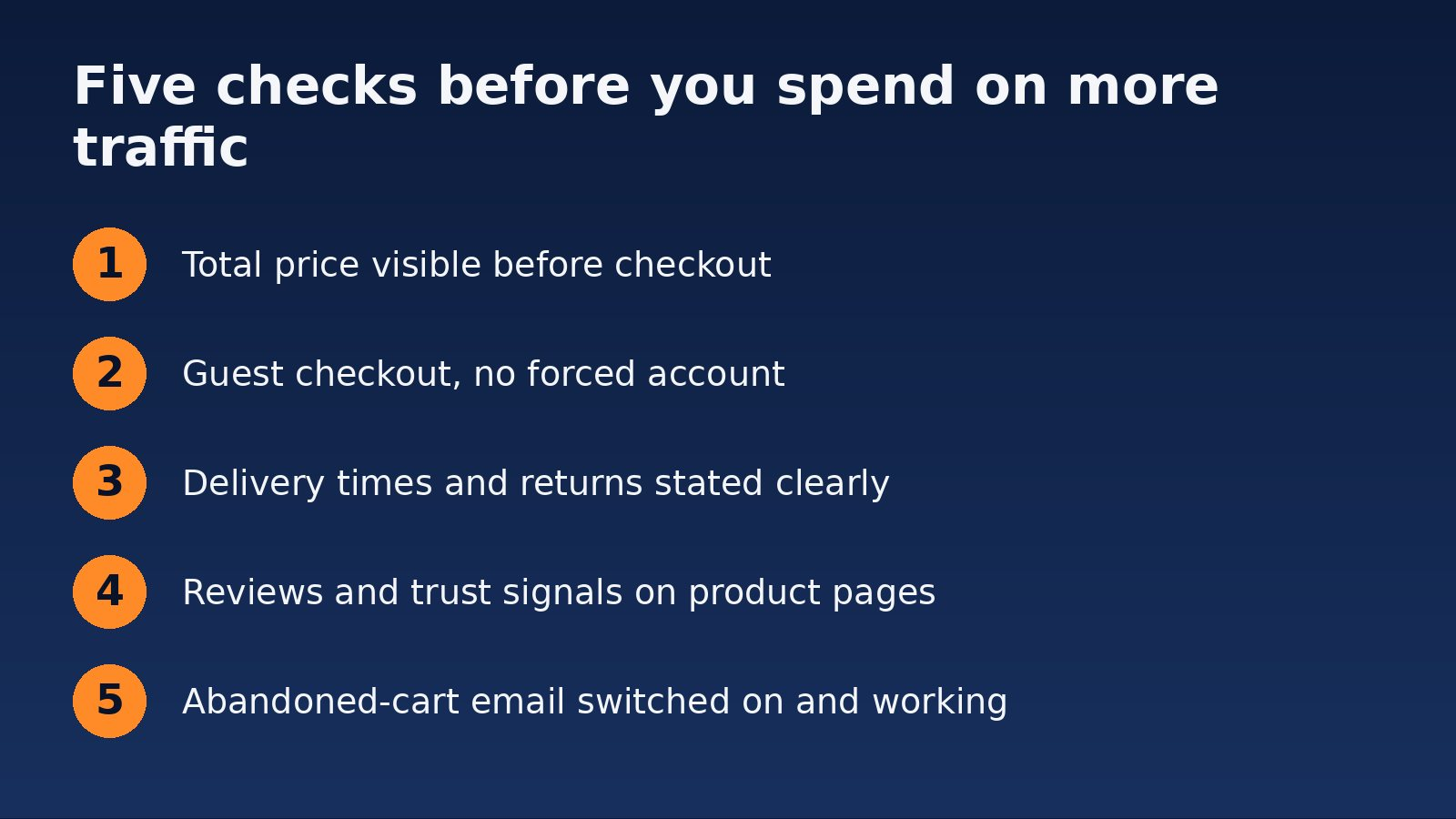
Do this on your phone, as a customer. Add something to the cart and go through to the payment step.
- Is the total price, with delivery, visible before the final step?
- Can you check out as a guest?
- Are delivery times and the returns policy stated clearly?
- Are there real reviews and visible contact details?
- Abandon the cart, using an email address you own. Does a reminder arrive?
If any answer is no, you’ve found a cheaper fix than another month of ad spend.
How long it takes and how you’ll know it works
The checkout and policy changes are usually a matter of days for a store on a mainstream platform. A reminder email sequence typically takes a week or two to set up and test. Reviews build over months.
The measure that matters is the share of visitors who buy, often called your conversion rate, tracked over a few weeks before and after each change, with the same traffic sources. Change one thing at a time where you can. If your ad spend and traffic stay level and orders rise, the fix is working. If you change five things and your ad spend at once, you won’t know which one did it.
If you’d like a second pair of eyes on where your store leaks, BeyondClix works with New Zealand online stores on analytics, email remarketing and conversion work, and our plans are published on the pricing page. Get in touch and we’ll start by looking at your checkout data.
Frequently asked questions
What is the average cart abandonment rate?
The Baymard Institute’s list puts it at 70.22 per cent, calculated across 50 studies and last updated 22 September 2025. Your own store’s rate will differ, and your analytics will show it.
How can I grow my online store without more ad spend?
Fix what loses sales at checkout, such as hidden costs, forced accounts and unclear delivery and returns. Then set up abandoned-cart emails and ask buyers for reviews.
Do abandoned cart emails work?
Klaviyo reports they earn the highest average revenue per recipient of the automated flows it measured. That is a vendor’s own data, so test it on your store.
Do NZ shoppers prefer New Zealand stores?
NZ Post found NZ retailers took 79.6 per cent of online spending in 2025, and over a quarter of shoppers named NZ-based stores, delivery visibility and easy returns as reasons for choosing a retailer.
Are Google’s free product listings available in New Zealand?
Google’s help page doesn’t list the countries for the Shopping tab, and says products may show but aren’t guaranteed to. Check inside Merchant Center for your account.
Sources
- NZ Post: eCommerce Market Sentiments Report media release (11 July 2026; 2025 data)
- Baymard Institute: cart abandonment rate statistics (updated 22 September 2025)
- Klaviyo: abandoned cart benchmarks (vendor data; 2 October 2026)
- Google Merchant Center Help: free listings (vendor documentation)
Want this run for your business?
Talk to our team. We will show you where the money is leaking and what we would do about it.