

You sell to other businesses. A good client is worth thousands of dollars, and you can name the kind of person who signs the cheque: an operations manager, a finance director, an owner. Google finds you people searching for what you sell. But what about the ones who are not searching yet? That is the job LinkedIn Ads is built for, and it is also an easy way to spend money fast with little to show.
This post is for New Zealand business owners and marketing managers deciding whether LinkedIn Ads deserves a slice of the budget. We cover who it suits, what it costs, the audience-size problem that catches NZ advertisers out, and what to ask before you sign anything.
Is LinkedIn right for your business?
LinkedIn lets you aim ads at people by job title, industry, company and seniority. That is its edge. On Google you pay when someone searches. On LinkedIn you pay to put your message in front of a defined group, whether or not they were looking.
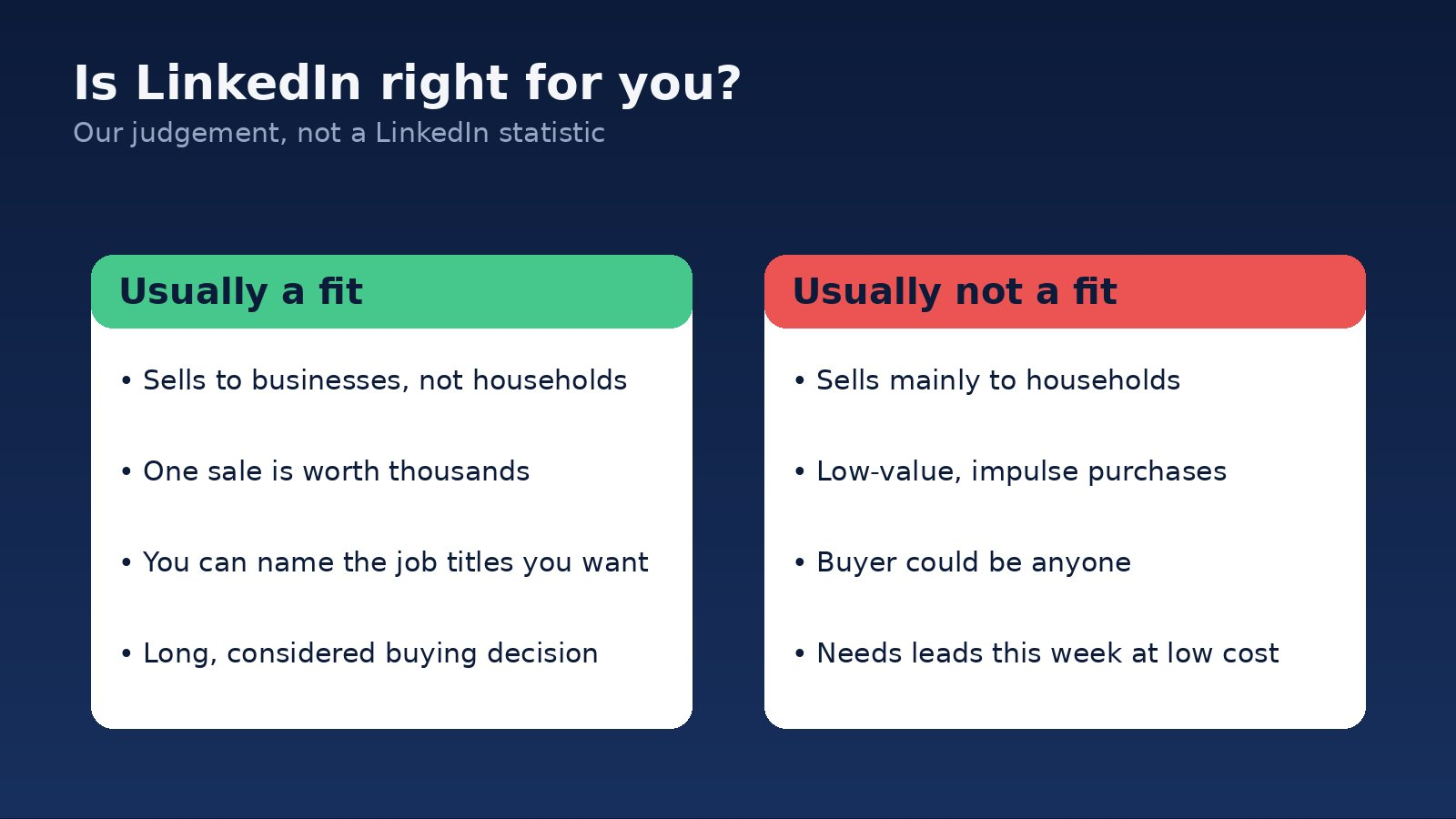
That is why it tends to suit businesses that sell to other businesses, where one customer is worth a lot and the buying decision takes weeks. It rarely suits businesses that sell to households or rely on low-value, impulse purchases. If your customer could be anyone, LinkedIn’s targeting gives you nothing extra to pay for.
The audience is there. NapoleonCat’s estimate of LinkedIn’s addressable advertising audience in New Zealand is about 3.5 million people, roughly two thirds of the population (NapoleonCat, LinkedIn users in New Zealand). NapoleonCat states that “all values are estimates and relate to addressable audience only”, and its own monthly table and headline figure differ slightly, so read it as “a few million”, not an exact count. That is a third-party estimate, not an official LinkedIn figure.
What does LinkedIn Ads cost?
Start with the floor. LinkedIn’s own Marketing Solutions page says “the minimum daily budget amount required to start on LinkedIn is $10, for any ad format”, and that the minimum lifetime budget for new campaigns is $100 (LinkedIn Marketing Solutions, maximise your budget). The page does not state a currency, so check the amount in your own account.
That is only the entry ticket. The real question is what each click and each enquiry costs. LinkedIn does not publish average prices, so we rely on third-party figures. One 2026 guide puts typical LinkedIn clicks at “roughly $5.00 to $12.00 across most B2B accounts”, with about $8.00 the most-cited average, professional services at $7 to $10, and website retargeting at $3 to $6 (Stackmatix, LinkedIn average cost per click, 4 September 2026). The author calls these figures directional, does not say where the data comes from, and does not state the currency. Treat them as a rough guide to expect, not a quote.
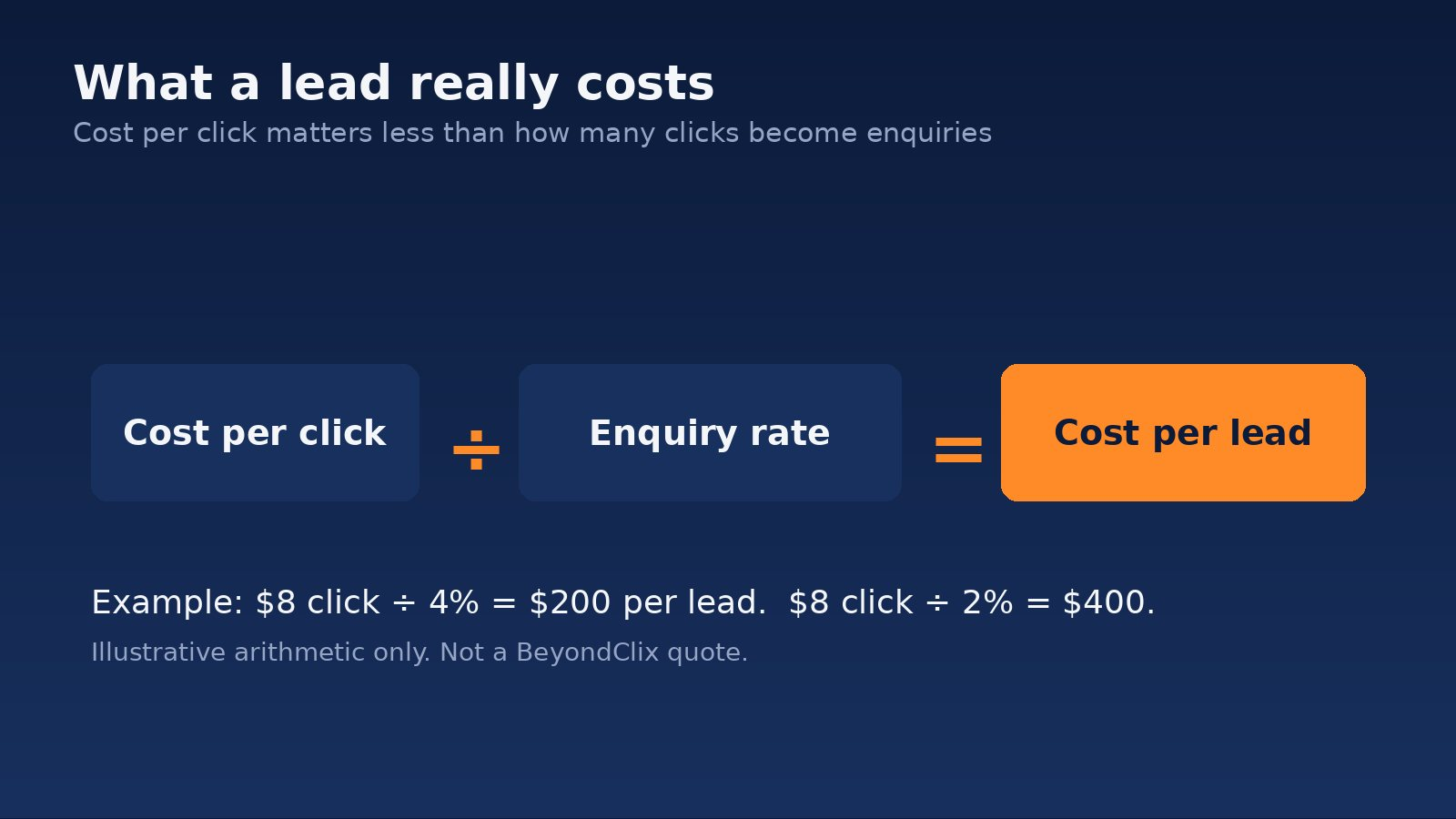
Now do the arithmetic that matters. The same guide explains that cost per lead is the cost per click divided by the share of visitors who enquire. At an $8 click and a 4 per cent enquiry rate, a lead costs $200. If only 2 per cent enquire, the same click costs you $400 per lead. (Those two examples are our own illustration of the formula, not benchmarks.)
Whether $200 or $400 is expensive depends on one number only you know: what a new customer is worth. If a client is worth $20,000 over its lifetime and one in ten leads becomes a client, a $300 lead is cheap. If a sale is worth $400, it is not. Work that out before you spend a dollar.

The catch for NZ advertisers: audience size
New Zealand is small, and LinkedIn targeting gets narrower with every choice you add. Pick a job title, an industry and a region, and you can shrink the audience to a few thousand people, or fewer.
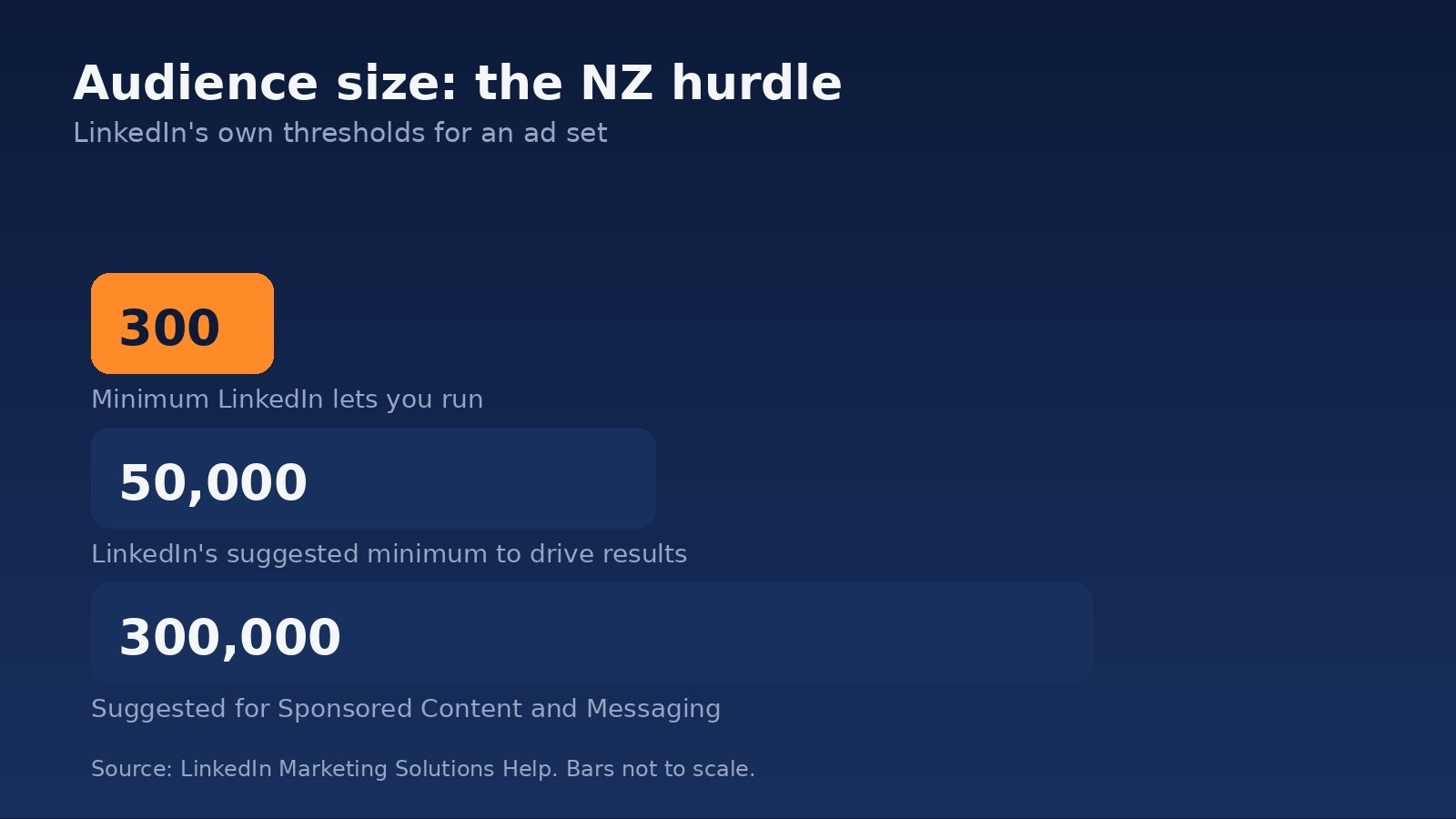
LinkedIn sets thresholds for this. Its help page says “the minimum audience size required for an ad set is 300 member accounts, but we suggest a minimum of 50,000 to drive results”, and suggests at least 300,000 for Sponsored Content and Sponsored Messaging (LinkedIn Marketing Solutions Help, audience size). Take that at face value: a tightly targeted NZ campaign may sit well under what LinkedIn itself recommends.
This does not make LinkedIn a bad idea in New Zealand. It changes how you plan:
- Check the audience size first. Campaign Manager shows the estimated audience before you spend. If it is tiny, widen it or choose a different channel.
- Expect repeat exposure. A small audience sees your ad often, so your message needs to earn the repeat views, and you should watch for fatigue.
- Consider a mix. For a narrow B2B audience, Google search ads often catch the buyers who are already looking. LinkedIn can reach the rest. See our paid advertising services for how we combine them.
How long until you know if it is working?
Not in the first week. The Stackmatix guide notes that cost per click in the first two to four weeks is often higher while the campaign settles, and suggests treating its ranges as “starting assumptions to be replaced by your own first 30 days of data”. That matches what most B2B buyers do anyway: they take weeks to decide, so a campaign that looks quiet at day ten may simply be early.
So judge it on the right things, at the right time:
- First 30 days: Is the audience the size you planned? What is the real cost per click and enquiry rate on your own numbers?
- By day 60: Are the enquiries the right people? One enquiry from the right job title beats ten from the wrong one.
- By day 90: What did the leads become? Track enquiries to meetings to sales, not clicks.
The common failure is counting form fills without asking whether anyone was worth speaking to. A lead form that LinkedIn pre-fills from a member’s profile makes enquiring easy, which can lift lead numbers while lowering quality. Make sure someone qualifies the leads, and that you can see what happened to each one.
Five questions to ask before you sign
Whether you hire us or anyone else, these separate a plan from a pitch:
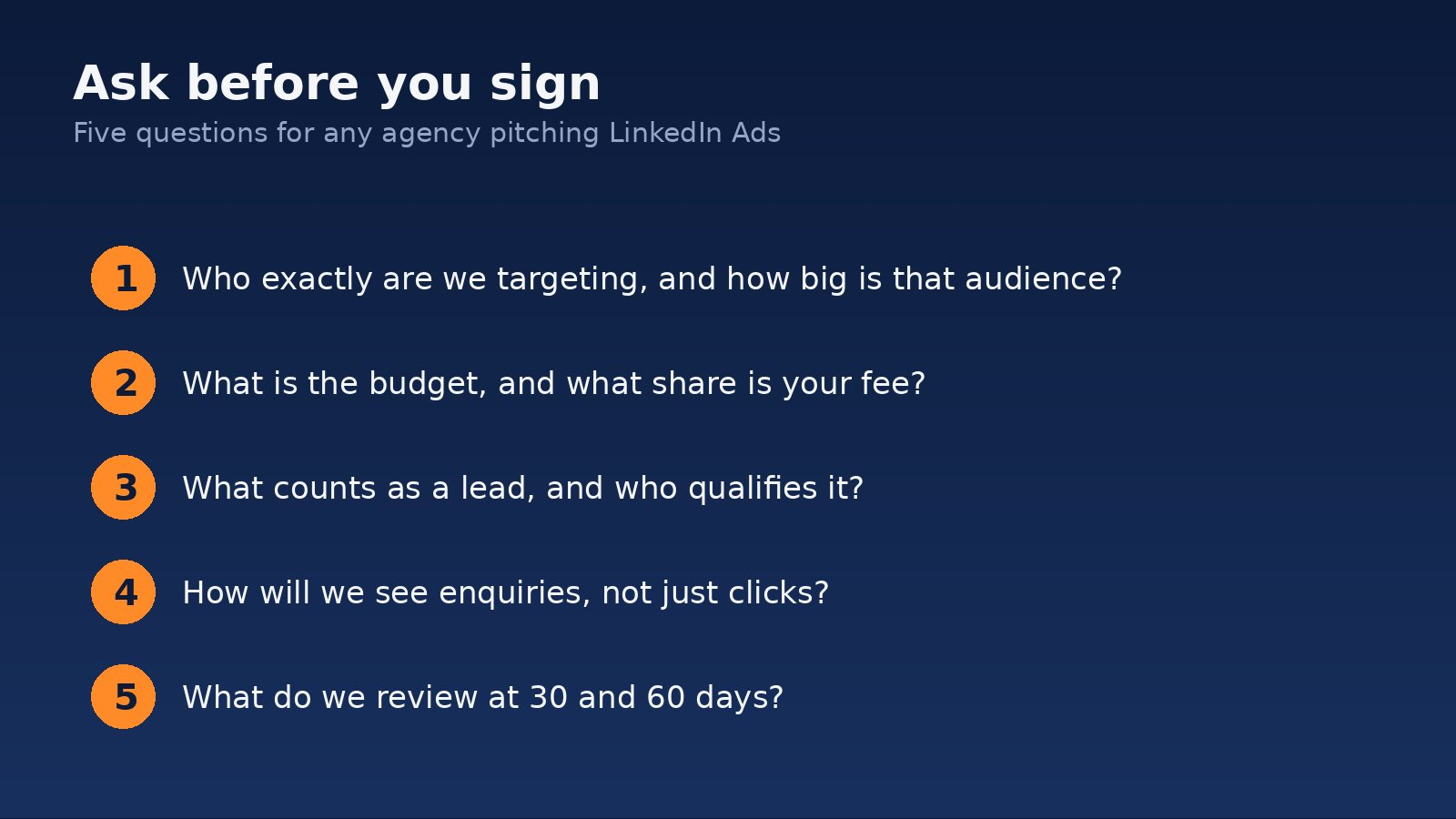
- Who exactly are we targeting, and how big is that audience? You want job titles and a number, not “decision-makers”.
- What is the budget, and what share goes to your fee? Ad spend and management fees should be separate and visible.
- What counts as a lead, and who qualifies it?
- How will we see enquiries, not just clicks? Ask to see the report format before you start.
- What do we review at 30 and 60 days, and what would make us stop?
Talk to us before you spend
If you sell to other businesses and you are weighing up LinkedIn, we will tell you plainly whether it suits you, or whether the same money works harder on Google. If LinkedIn makes sense, we will show you the audience size and a realistic budget before anything goes live. Get in touch through our services page.
Frequently asked questions
What is the minimum budget for LinkedIn Ads?
LinkedIn states a minimum of $10 a day for any ad format, and $100 lifetime for a new campaign. Those are the entry floor, not a budget that produces results on its own.
How much does a click cost on LinkedIn?
LinkedIn does not publish an average. One third-party 2026 guide cites roughly $5 to $12 per click for most B2B accounts, with about $8 the most-cited average. Treat that as directional, and check your own account.
Is LinkedIn Ads worth it in New Zealand?
It can be, if you sell to businesses, a customer is worth a lot, and you can reach a large enough audience. For consumer products, or a very narrow audience, other channels usually do more.
How big does my audience need to be?
LinkedIn requires at least 300 members and suggests 50,000 or more to drive results, and 300,000 for Sponsored Content and Messaging.
How long before LinkedIn Ads show results?
Plan on a full 30 days to gather your own data and 60 to 90 days to judge lead quality, because B2B buyers decide slowly.
Sources
- LinkedIn Marketing Solutions: maximise your budget (vendor documentation; minimum budgets)
- LinkedIn Marketing Solutions Help: audience size (vendor documentation)
- Stackmatix: LinkedIn average cost per click (agency guide, 4 September 2026; directional, currency not stated)
- NapoleonCat: LinkedIn users in New Zealand (third-party estimate of addressable audience, accessed 2 November 2026)
Want this run for your business?
Talk to our team. We will show you where the money is leaking and what we would do about it.