

Every business we talk to has increased their ad budget this year. New Zealand’s digital advertising market pulled in $2.967 billion in 2025, up 12% on the year before, with search advertising alone accounting for $1.44 billion of that, according to the IAB New Zealand Q4 2025 Digital Advertising Revenue Report. More businesses are spending more money to be found online than at any point before.
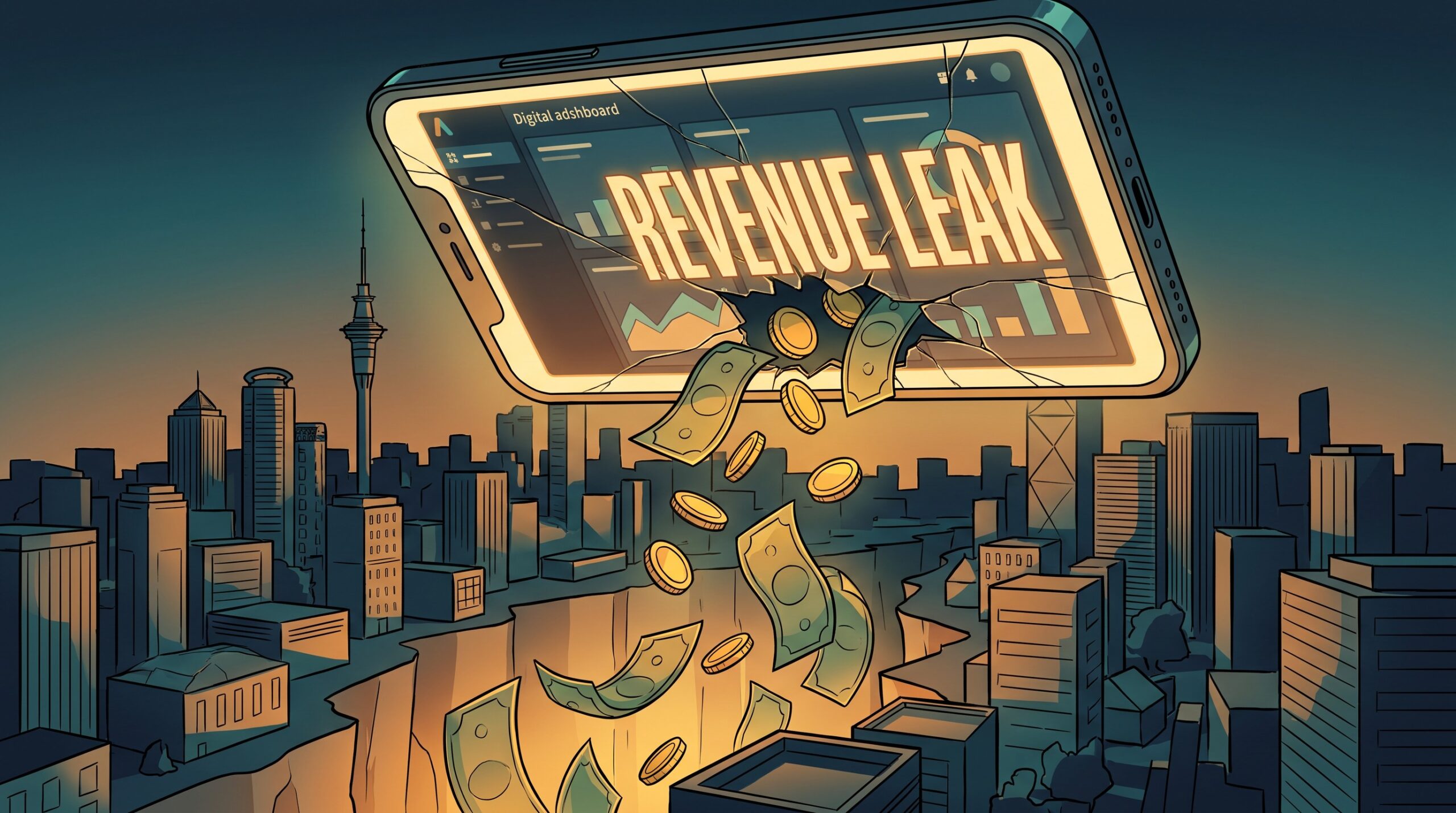
Here is the question almost nobody asks before writing the next cheque: how much of last month’s spend actually reached a real customer? Not an impression, not a click — a real person who could have bought from you. For a lot of accounts, the honest answer is uncomfortable. This is where that money actually goes, and what to check before you increase the budget again.
The account nobody has looked at since it was built
WordStream ran its largest Google Ads performance study to date, grading 251,236 account assessments covering 15,666 unique accounts between January and November 2025. The headline number: the average account wastes $1,127.54 a month — around 36 cents of every dollar spent going to clicks that never converted.
It gets sharper. 29% of accounts recorded zero conversions over a 90-day window, despite averaging 12,667 impressions a month — real budget, real visibility, nothing to show for it. And one structural habit made an outsized difference: accounts running at least one negative keyword averaged a 13% conversion rate, against 4.6% for accounts with none — nearly a threefold gap from a single, unglamorous piece of account hygiene. A quarter of the businesses studied had never added one.
If nobody has touched the negative keyword list, the search term report, or the campaign structure since the account was set up, this is very likely where your leak starts. It is also the cheapest one to fix — it costs time, not budget.
Clicks that were never a real customer
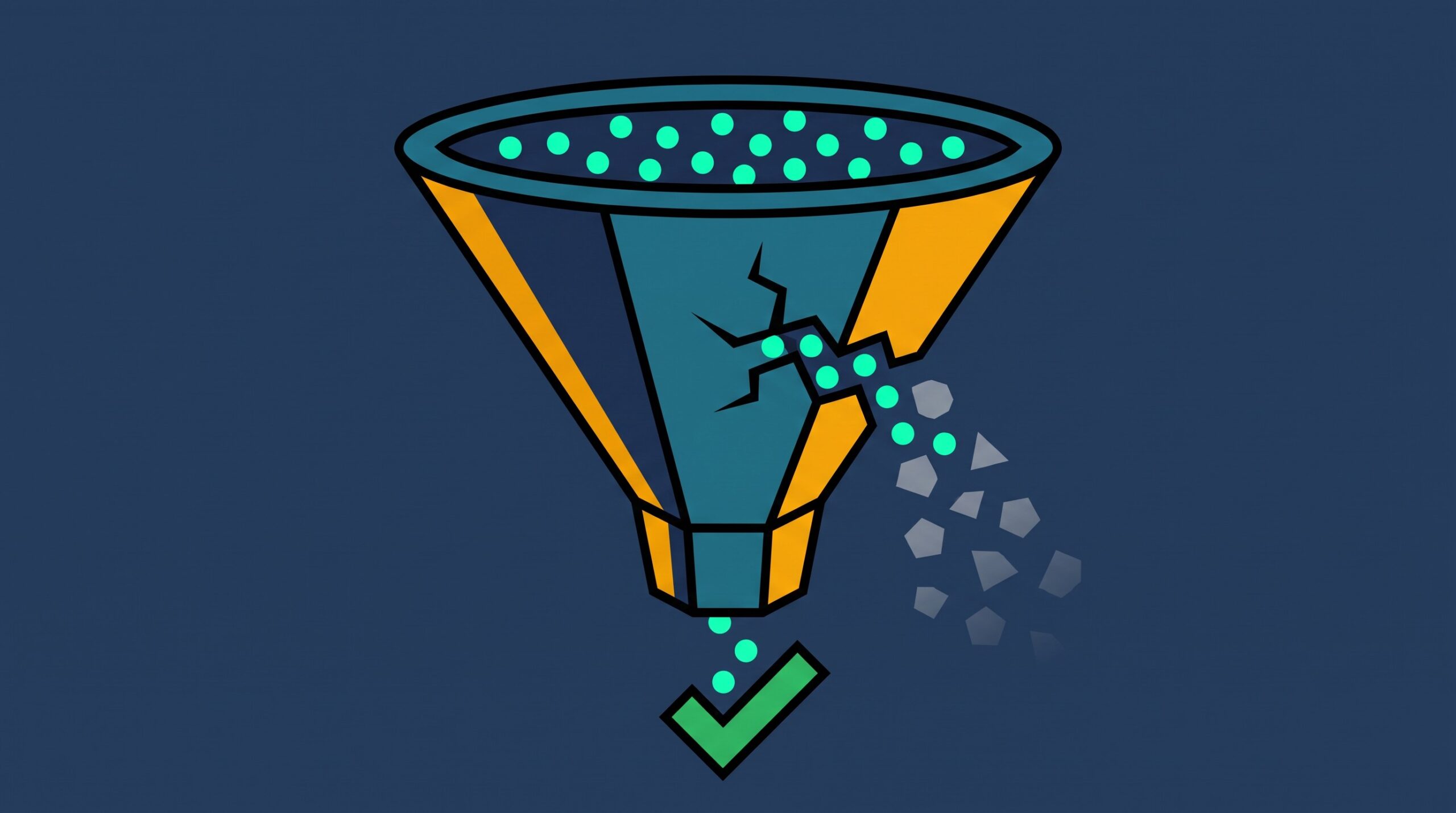
Some of what you are paying for was never a person deciding whether to buy from you. Lunio’s 2026 State of Click Fraud Report, built on an analysis of 2.7 billion paid ad clicks across six platforms and ten countries between August 2024 and mid-2025, found that 8.51% of all paid ad traffic was invalid — bots, scrapers, competitor clicking and accidental taps — adding up to $63 billion wasted globally in 2025. Rates varied sharply by platform: TikTok topped the list at 24.2%, LinkedIn at 19.88%, X at 12.79%, with Meta performing best of the major platforms at 8.2%.
Most platforms, Google included, run their own invalid-click filtering and refund clearly fraudulent clicks automatically. What that filtering does not catch is the traffic that looks legitimate enough to pass — a slow-but-real bot, a curious click with zero buying intent, a competitor’s staff member checking your ad copy. None of that shows up as a refund. It just shows up as spend with nothing behind it.

Good clicks, landing on a page that can’t do its job
Say the click is real. It still has to land somewhere that can turn it into an enquiry. Unbounce’s Conversion Benchmark Report, drawn from over 41,000 landing pages and 57 million conversions, puts the median landing page conversion rate at 6.6%. That is a median — half of all landing pages convert worse than that, and a generic homepage standing in for a proper landing page, a page that takes six seconds to load, or a page that doesn’t match what the ad promised, sits well down that list while still paying full price per click.
This is the step businesses skip most often, because it feels like a website job, not an ads job. It isn’t. A great ad sending traffic to the wrong page is the same as a great ad not running at all — the spend leaves the account either way.

Optimising for clicks because nobody set up conversions
Google’s own guidance on conversion tracking is direct about what it is for: it shows how your ads, listings and keywords connect to the outcomes that actually matter to your business — a purchase, a call, a booking, an enquiry — not just a click. Without it switched on and configured correctly, every automated bidding strategy in the account is optimising for the wrong thing. It will happily spend more to get more clicks, because clicks are the only signal it has. It has no way of knowing which of those clicks turned into a customer and which didn’t.
This is the quiet one. Nothing looks broken. The dashboard shows clicks, impressions and a click-through rate that might even look healthy. It is only when you ask “how many of those became paying customers” that the gap shows up — and by then, months of budget have already gone toward the wrong goal.

What actually fixes this
None of the above requires a bigger budget. It requires someone to actually look:
- Pull the search terms report and read it. If nobody has added a negative keyword in the last month, you are very likely funding searches you would never choose to pay for.
- Check whether conversion tracking is firing correctly — not just installed, actually recording real conversions against the right action, cross-checked against your CRM or booking numbers.
- Click your own ads and see where they land. Time it. Read it as a stranger would. If the page doesn’t answer “what is this, what does it cost, what do I do next” in seconds, that’s the leak.
- Look for accounts with spend but zero conversions over 90 days. WordStream’s data says that’s nearly one in three accounts — check whether yours is one of them before adding more budget to it.
None of this is exotic. It is the unglamorous, ongoing account management that gets skipped when a business sets up ads once and leaves them running. If you want a second set of eyes on where your own account is leaking, that is exactly what our Google Ads management covers — we run this same audit on every account we take on, before we ever recommend spending a dollar more.

Spend is rising across New Zealand’s ad market. That’s not a reason to spend less — it’s a reason to make sure every dollar of the increase is landing on a real customer, not leaking out through the same four gaps most accounts never get checked for.
Frequently asked questions
How much of a typical Google Ads budget actually goes to waste?
WordStream’s 2025 study of over 15,000 accounts found the average account wastes $1,127.54 a month — roughly 36% of typical spend — on clicks that never converted. Nearly a third of accounts studied had zero conversions over a 90-day window.
What is invalid traffic, and can I stop paying for it?
Invalid traffic (IVT) is clicks and impressions that were never a genuine potential customer — bots, scrapers, and accidental or fraudulent clicks. Lunio’s 2026 report puts the global rate at 8.51% of all paid ad traffic. Major platforms filter and refund the most obvious cases automatically, but no platform catches all of it, which is one more reason account structure and conversion tracking matter.
Do I need negative keywords if my campaigns are already performing?
Yes. WordStream’s data found accounts running at least one negative keyword averaged a 13% conversion rate against 4.6% for accounts with none — one of the largest single differences in the study. “Performing okay” and “not leaking budget” are not the same thing until you’ve checked the search terms report.
My ads get plenty of clicks. Why would the landing page matter?
Because a click that lands on a slow, generic, or mismatched page is spend with nowhere to go. Unbounce’s benchmark of over 41,000 landing pages puts the median conversion rate at 6.6% — and that’s a median, meaning half of all landing pages convert below that while paying full price per click.
How do I know if my conversion tracking is actually working?
Compare what your Google Ads account reports as conversions against your actual CRM entries, calls, or bookings over the same period for a few weeks. If the numbers don’t roughly line up, your automated bidding is optimising for the wrong signal, however healthy the dashboard looks.
What should I check before increasing my ad budget?
Four things, in this order: whether conversion tracking is accurate, whether the search terms report shows irrelevant clicks slipping through, whether the landing page actually matches the ad, and whether any campaigns have gone 90 days with spend and no conversions. Fix the leaks before you turn up the tap.
Sources
- IAB New Zealand, Q4 CY2025 Digital Advertising Revenue Report ($2.967b total NZ digital ad revenue for 2025, up 12% YoY; search $1.44b, up 12% YoY)
- WordStream, “Our Biggest Google Ads Performance Study Yet” (15,666 accounts, 251,236 assessments, Jan–Nov 2025; $1,127.54 average monthly waste; 29% zero-conversion accounts; negative-keyword conversion rate comparison), corroborated via ppc.land’s reporting
- Lunio, State of Click Fraud Report 2026 (2.7bn clicks analysed, Aug 2024–2025; $63bn lost to invalid traffic in 2025; 8.51% invalid traffic rate; platform breakdown), corroborated via the Association of National Advertisers
- Unbounce, Conversion Benchmark Report (41,000+ landing pages, 57m conversions, 464m pageviews; 6.6% median conversion rate)
- Google Ads Help, “Conversion tracking: Definition” (official guidance on why conversion tracking is required for accurate optimisation)
All figures verified against their primary or directly reporting sources on 16 September 2026.
Want this run for your business?
Talk to our team. We will show you where the money is leaking and what we would do about it.