

You signed with an agency three weeks ago. The ads are live, the invoice has landed, and your phone has barely rung. Is something wrong? Usually not. But “usually” is not good enough when it’s your money, so this guide lays out what a sensible first 90 days looks like, what you should see and when, and the signs that something genuinely is off.
One caveat before we start: no two businesses run to the same timetable. Sales cycle, budget and competition all move the dates. What follows is a realistic shape, built on what Google and independent research publish about how fast these channels work.
Weeks 1 to 2: Groundwork, not results
The first two weeks should feel unglamorous. If your agency is spending them on a flashy launch with no setup, be wary. What should happen:
- Tracking goes in first. Before a dollar of advertising is spent, the agency should set up a way to count the things that matter to you: phone calls, form enquiries, quote requests, sales. Google advises advertisers that after conversion tracking is set up, they should wait for a few conversion cycles before implementing a new bid strategy so its algorithms can adjust. Without tracking, you can’t tell later which ads worked.
- You agree on what a good result is. How many enquiries a month would make this worthwhile? What is a new customer worth to you? Write the number down now, because it’s the yardstick for day 90.
- Campaigns and pages are built. Ads, the page they send people to, and the form or phone number on it.
What you should not expect: a flood of leads. At this stage you’re paying for a foundation. If you want to know what the foundation costs, our guide on what digital marketing actually costs in NZ breaks down the numbers.

Weeks 3 to 6: The learning period
Here’s the part that catches business owners out. Modern Google Ads campaigns use automated bidding, where Google’s software decides how much to pay for each click based on who’s most likely to enquire. The software starts knowing nothing about your business and has to learn from your results.
Google is open about how long that takes. Its help centre says it can take up to around 50 conversion events or 3 conversion cycles for a bidding strategy to calibrate. A conversion cycle is simply how long it takes someone to go from clicking your ad to enquiring. For a takeaway that might be an hour. For a law firm or a renovation, it could be weeks.
Google also lists what drives the duration: how many conversions you get, how long your conversion cycles are, and the type of bidding strategy. In plain terms, a business with a small budget and a long sales cycle will take longer to settle than a busy online shop. That’s maths, not a failure.
The mistake that restarts the clock
Google lists what puts a campaign back into learning: a new strategy, a changed setting, or campaigns, ad groups or keywords added or removed. So an owner who panics in week three and asks the agency to “change everything” can reset the progress already made. Good agencies make some early changes, such as blocking irrelevant searches. They don’t rebuild the account every fortnight.

What you should see by week 6
You’re looking for signs of life, not final results:
- Enquiries are being recorded, even if the volume is modest.
- The agency can show you which searches triggered your ads, and has started blocking the irrelevant ones.
- The cost per enquiry is visible and, ideally, trending down from week 3.
- Calls and forms match what the report says. Ring your own number. Check the enquiries in your inbox against the dashboard.
Weeks 7 to 10: Where the real improvement starts
With a few weeks of data behind it, the campaign finally has something to work from. This is when a competent agency starts making sharper decisions: shifting budget to what’s producing enquiries, rewriting ads that attract clicks but no calls, and fixing the landing page if visitors arrive and leave.
That last one matters more than most owners expect. If people click and don’t enquire, the cause often sits on your website rather than in the ads. Be ready to hear that, and to act on it.
Paid ads and SEO run on different clocks
If your plan includes search engine optimisation (getting your site to show up in normal, unpaid Google results), set a different expectation. Ads can produce enquiries in days. SEO is slower, and honest agencies say so.
Independent data backs this up. An Ahrefs study from May 2025 found only 1.74% of newly published pages reached Google’s top 10 within a year, based on a sample of one million random URLs. Of the pages that did get there, 40.82% did so within a month, which tells you quick wins exist but are the exception. The same study found 72.9% of top-10 pages are more than three years old. Google’s own guidance is similarly cautious: some changes can take effect within hours, others several months.
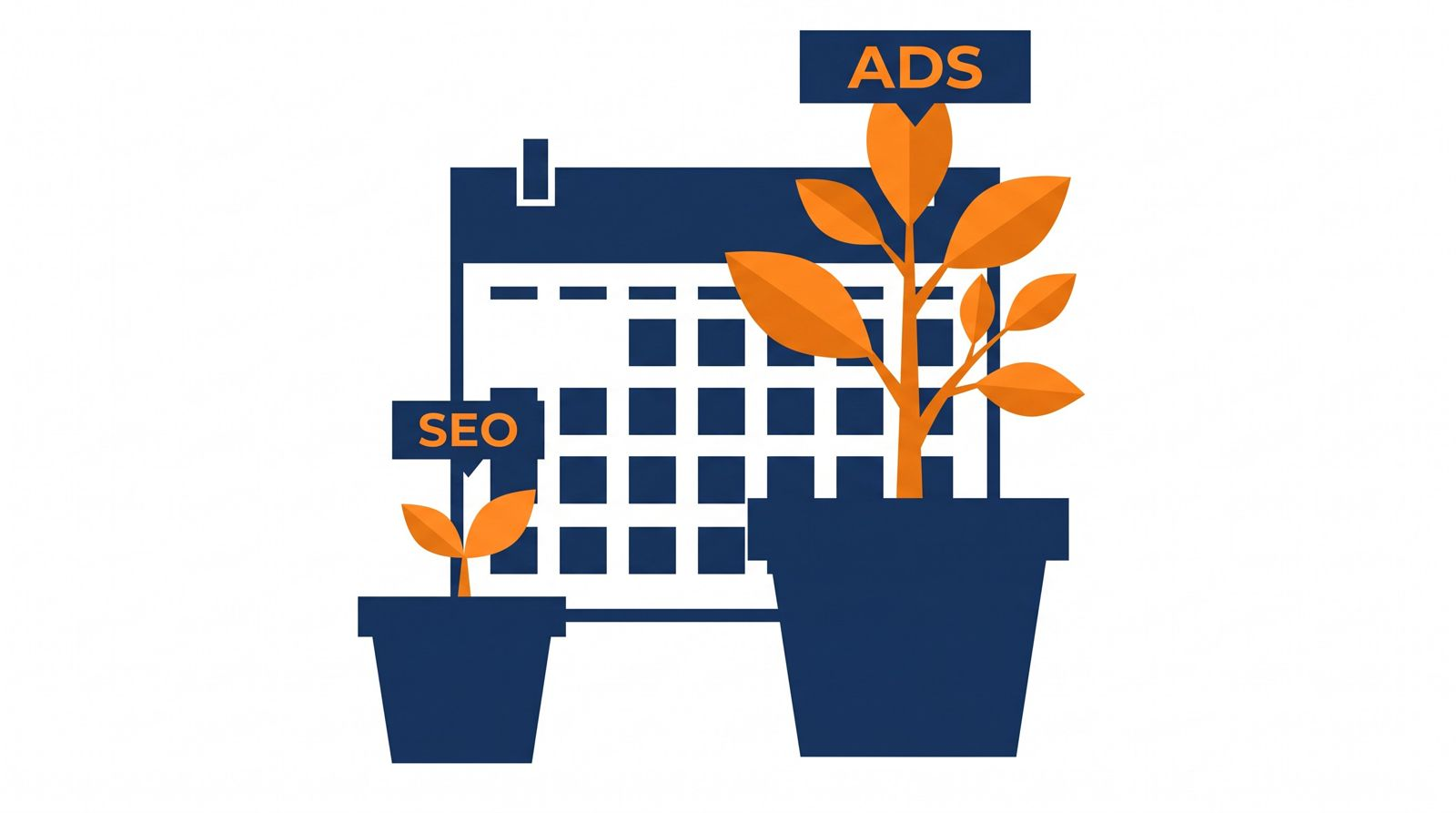
Our reading of this: treat SEO in the first 90 days as groundwork (fixing the site, building pages, earning trust), and judge it on leading signs such as impressions and rankings for the terms you care about. Don’t judge it on sales yet. If your agency promises page-one rankings in 30 days, ask for evidence.
Days 80 to 90: The review that matters
This is where you hold the agency, and your own expectations, to account. Bring the number you wrote down in week one and ask for a plain-English report covering:
| Question | What a good answer sounds like |
|---|---|
| How many enquiries did we get, and from where? | A real count, split by ads, phone calls, forms and (if relevant) SEO. |
| What did each enquiry cost? | A figure, and the trend since week 3. |
| How many became customers? | You tell them. They ask you. Only you know who bought. |
| What did you change, and why? | A short list with reasons and results. |
| What are you doing next month? | Specific actions, not “continued optimisation”. |
Warning signs worth acting on
- No tracking at day 14. You can’t manage what nobody is counting.
- Reports full of clicks and impressions but no enquiries. Those are activity, not outcomes.
- You can’t see the account. You should have access to your own ad account and your own data.
- Enquiries in the report don’t match your phone and inbox. Investigate immediately.
- Constant restructuring. It resets learning and hides whether anything works.
- Vague answers to plain questions. A good agency can explain what it did in words you understand.
If you’re still choosing who to hire, the questions above double as a screening checklist. Ask any prospective agency what they’d expect to happen in each of these windows.
The short version
Expect groundwork in weeks 1 to 2, a learning period in weeks 3 to 6, sharper optimisation from week 7, and an honest review around day 90. Ads should show life within weeks. SEO should show direction within months. If you can’t see numbers, can’t reach your data, or can’t get a straight answer, that’s the real red flag, whatever the calendar says.
Want a clear plan for your first 90 days? See what we do on our services page, or talk to us. We’ll tell you straight what we’d do and what to expect.
Frequently asked questions
How long before Google Ads start working?
Ads can start getting clicks within days. Google says its bidding systems can take up to around 50 conversion events or three conversion cycles to calibrate, so expect the first six weeks to be a learning phase.
Is it normal to get few leads in the first month?
Often, yes. The campaign is being set up and is learning. What matters is that tracking works and the trend is moving the right way.
How long does SEO take to work?
Longer than ads. In an Ahrefs study, only 1.74% of newly published pages reached Google’s top 10 within a year. Plan on months, and judge early progress by rankings and visibility rather than sales.
Should I ask my agency to change things if results are slow?
Ask what the data says first. Google notes that changing settings or adding or removing campaigns can put bidding back into learning, so constant changes can slow things down.
When should I decide whether to continue?
Around day 90, against the target you set at the start. You need enough data to judge: a real enquiry count, cost per enquiry, and how many became customers.
Sources
- Google Ads Help: Duration of the learning period for campaigns and what affects it
- Google Ads Help: How our bidding algorithms learn
- Ahrefs: How Long Does It Take to Rank in Google? And How Old Are Top Ranking Pages? (15 May 2025)
- Google Search Central: SEO Starter Guide
Timelines in this guide are a general shape, not a guarantee. Google’s figures describe its own bidding systems; the Ahrefs study analysed US keywords and a sample of URLs.
Want this run for your business?
Talk to our team. We will show you where the money is leaking and what we would do about it.