

Your ads are running. Enquiries come in, as long as you keep paying for them. Then someone suggests you should also be doing “content”: blog posts, guides, useful pages on your site. Your first question is a fair one. If the ads already work, why spend more money on something slower?
The honest answer is that it depends on what your website does once the ad click lands. This guide sets out what the evidence says, what it doesn’t say, what it costs you in time and money, and how to decide without being sold something.
Ads and content do different jobs
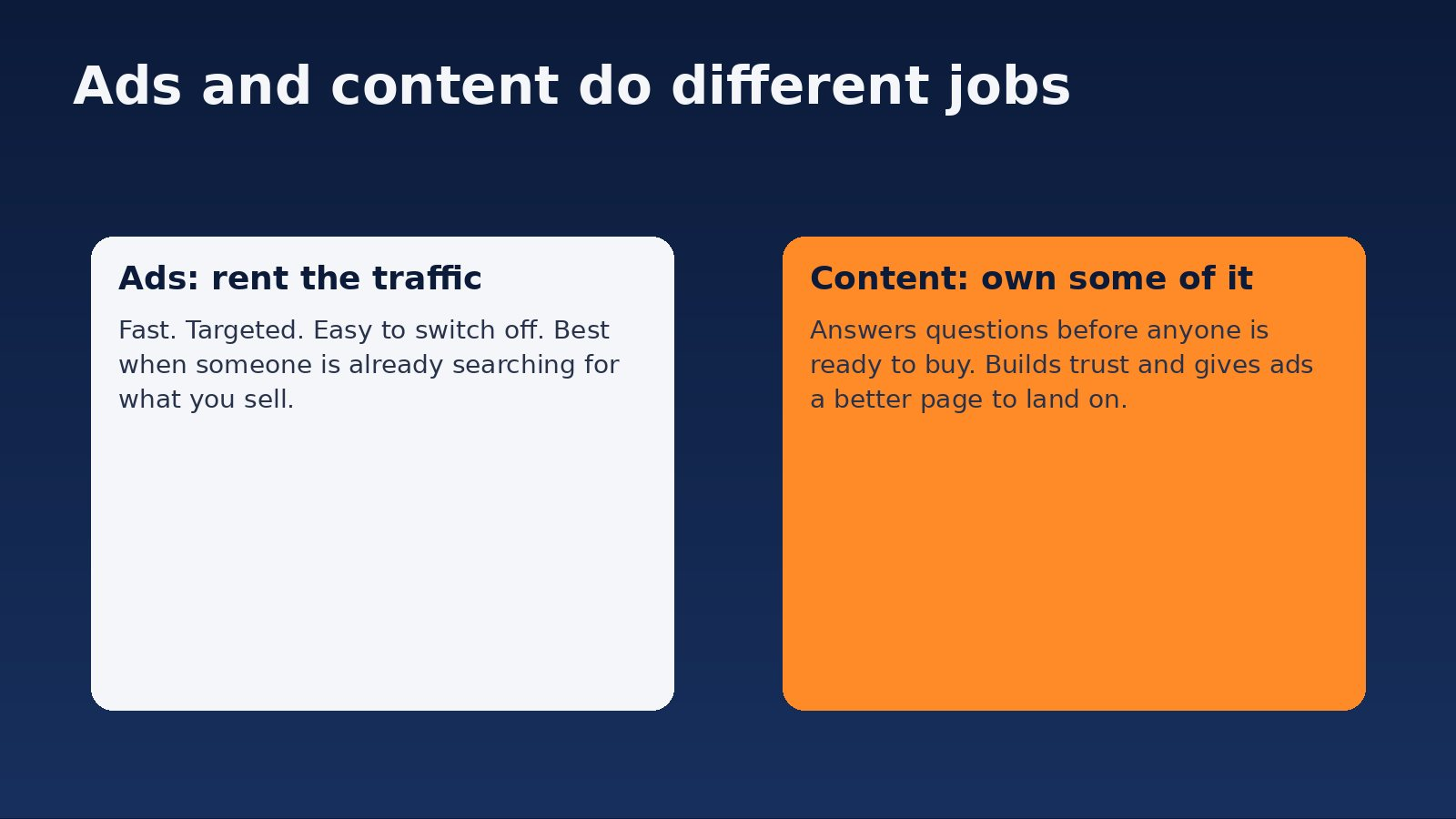
Ads are rented attention. You pay, people see you, and when you stop paying, they stop seeing you. That is not a flaw. It is why ads are the fastest way to get in front of someone already searching for what you sell.
Content is a page on your site that answers a question a customer has. A guide to what a job costs, a page explaining how your service works, a plain comparison of two options. It takes longer to pay off, but it isn’t switched off when the invoice is paid. A good page can keep bringing in visitors, and it can also be the page your ad sends people to.
So the useful question is not “ads or content?” It is “which problem do I have right now?” If nobody knows you exist, ads fix that quickly. If people click and leave, content and page quality fix that. If you rely entirely on ads and the cost per enquiry keeps climbing, content is how you start owning some of your traffic.
What the evidence says about ads alone
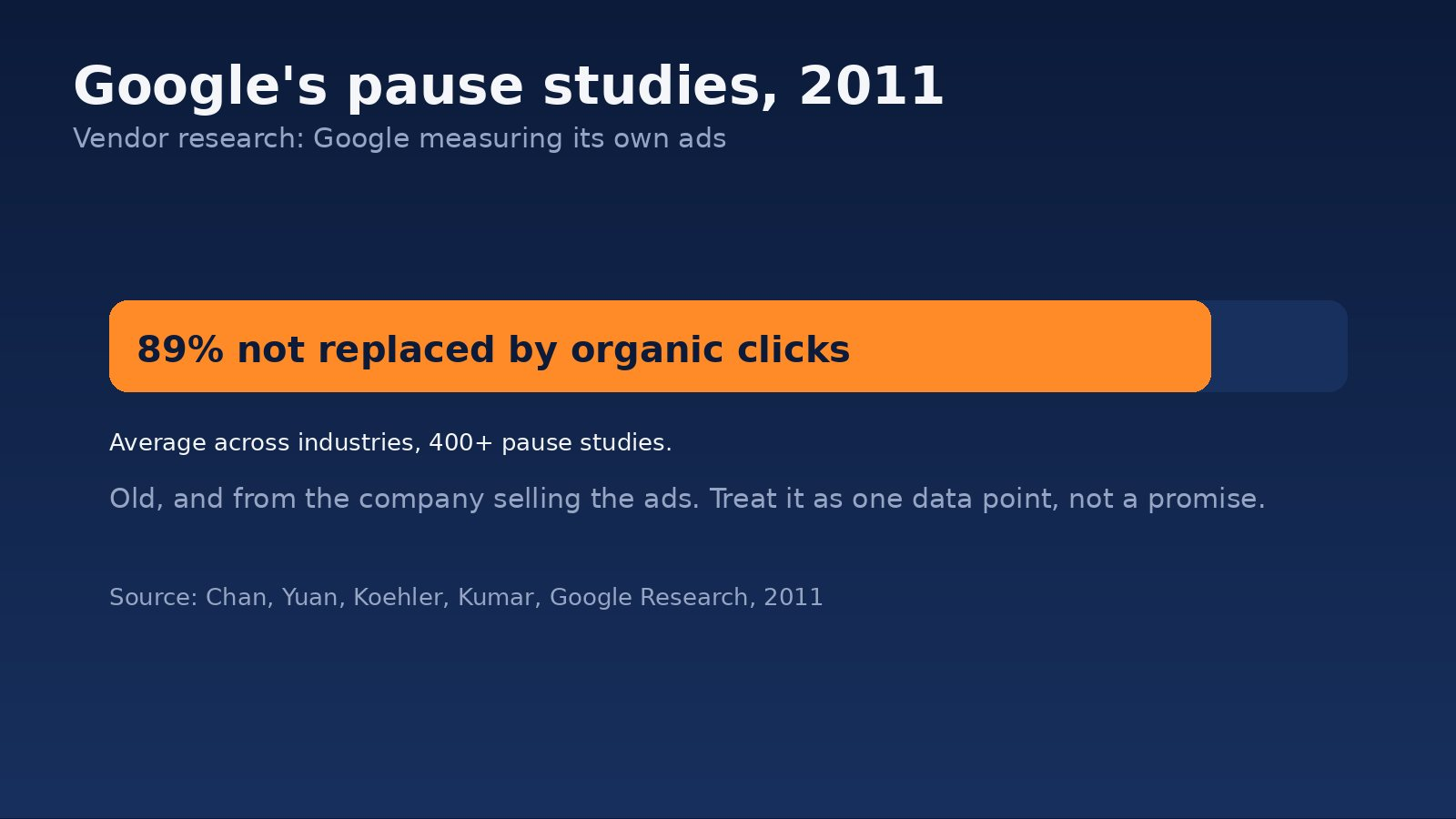
Google researchers ran more than 400 “Search Ads Pause Studies”, pausing ads for some advertisers and measuring what happened to their traffic. Their 2011 paper reported that, on average across industries, 89% of the traffic generated by search ads was not replaced by organic clicks when the ads were paused (Chan, Yuan, Koehler and Kumar, Google Research, 2011).
Read that carefully, because it cuts both ways. It is a good argument that ads bring you visitors you would not otherwise get, which is why content does not make ads redundant. But it is also research by Google about Google’s own product, it is more than a decade old, and it measures clicks, not profit. We would not make a budget decision on it alone. We include it because it answers a common worry: “if I rank organically, do I still need ads?” On Google’s figures, mostly yes, if you want the same volume of visitors.
Where content earns its keep when you’re already paying for clicks
1. It makes the ad click worth more
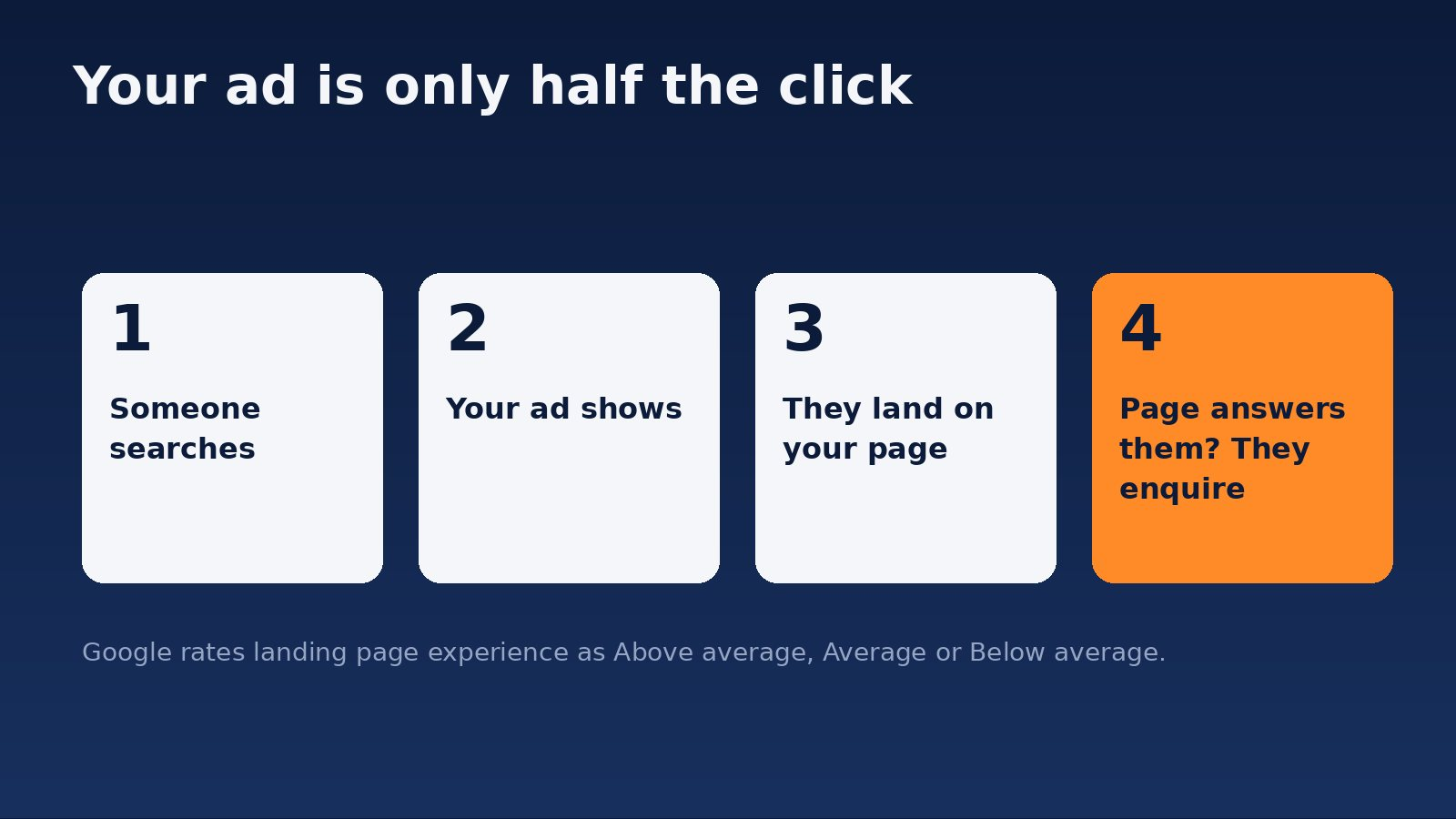
An ad gets someone to your door. The page decides whether they come in. Google’s own help centre describes landing page experience as “how relevant and useful your landing page is to people who click your ad”, and rates it Above average, Average or Below average against other advertisers whose ads showed for the same search (Google Ads Help: About Quality Score).
Google also lists “the quality of your ads and landing page” as one of the factors behind Ad Rank, the figure that decides whether and where your ad shows (Google Ads Help: About Ad Rank). One caution so we don’t overstate it: Google says Quality Score itself “is not an input in the ad auction”. It is a diagnostic. But the quality of your page still feeds into how your ads are judged.
The practical point for you is simpler than the mechanics. A page that clearly answers the question the searcher typed will convert more of the clicks you’ve already paid for. That is content doing work for your ad budget on day one.
2. It catches people who aren’t ready to buy yet
Ads tend to be bought against searches that sound like a purchase: “electrician Howick”, “accountant for small business”. But plenty of people are earlier than that. They’re asking what something costs, what the options are, or what could go wrong. If you only show up when they’re ready to buy, you miss the stage where they decide who to trust.
Most New Zealanders are reachable online. DataReportal reported 5.06 million internet users in New Zealand at the end of 2025, 96.2% of the population (DataReportal, Digital 2026: New Zealand, published 8 November 2025). It tells you the audience is online. It does not tell you how many are researching your category, so don’t read more into it than that.
3. It lowers your dependence on one channel
If every enquiry comes from paid clicks, then a price rise, a competitor bidding harder or a policy change hits your phone straight away. Useful pages that bring in some visitors without a per-click fee give you a cushion. We can’t promise how big that cushion is for your business. It depends on your market, and we won’t quote a number we can’t source.
What good content is, and what isn’t worth paying for
Google’s published guidance says content should be “created primarily for people, and not to manipulate search engine rankings”, and it warns against content “primarily made to attract visits from search engines” (Google Search Central: Creating helpful, reliable, people-first content). It also says it is useful to be clear about who wrote something and why.
For a business owner, that translates into a simple test. Would a customer who came straight to your site find this page useful? If yes, it’s worth having. If it exists only to catch search traffic, skip it.
Here is what we’d pay for, and what we’d refuse:
- Worth paying for: a clear page per main service, honest pricing guidance, answers to the questions your sales team hears every week, and real proof such as genuine reviews and described jobs.
- Not worth paying for: a high volume of thin posts, generic articles that could be about any business, and anything published to hit a posting schedule rather than to help a customer.
If a supplier offers you “30 blog posts a month” without asking what your customers actually ask, be cautious.

What it costs, how long it takes, and how you’ll know
Cost. We haven’t found reliable published NZ figures for what content costs, so we won’t invent one. Costs vary with how many pages you need and who writes them. Ask any supplier for a price per page and what’s included: research, writing, images, checking facts, and upkeep.
Time. Improving the page your ads land on can show up in your enquiry rate within weeks, because the traffic is already arriving. Content aimed at search results is slower, and nobody can honestly promise a date. Be wary of anyone who does.
How you’ll know. Track three things monthly: enquiries from your ad landing pages (calls and forms), enquiries from visitors who arrived without clicking an ad, and the cost per enquiry across everything. If paid enquiries hold steady while enquiries from other sources grow, content is working. If neither moves after a few months, change the content, not just the quantity.
A sensible order for a business already running ads
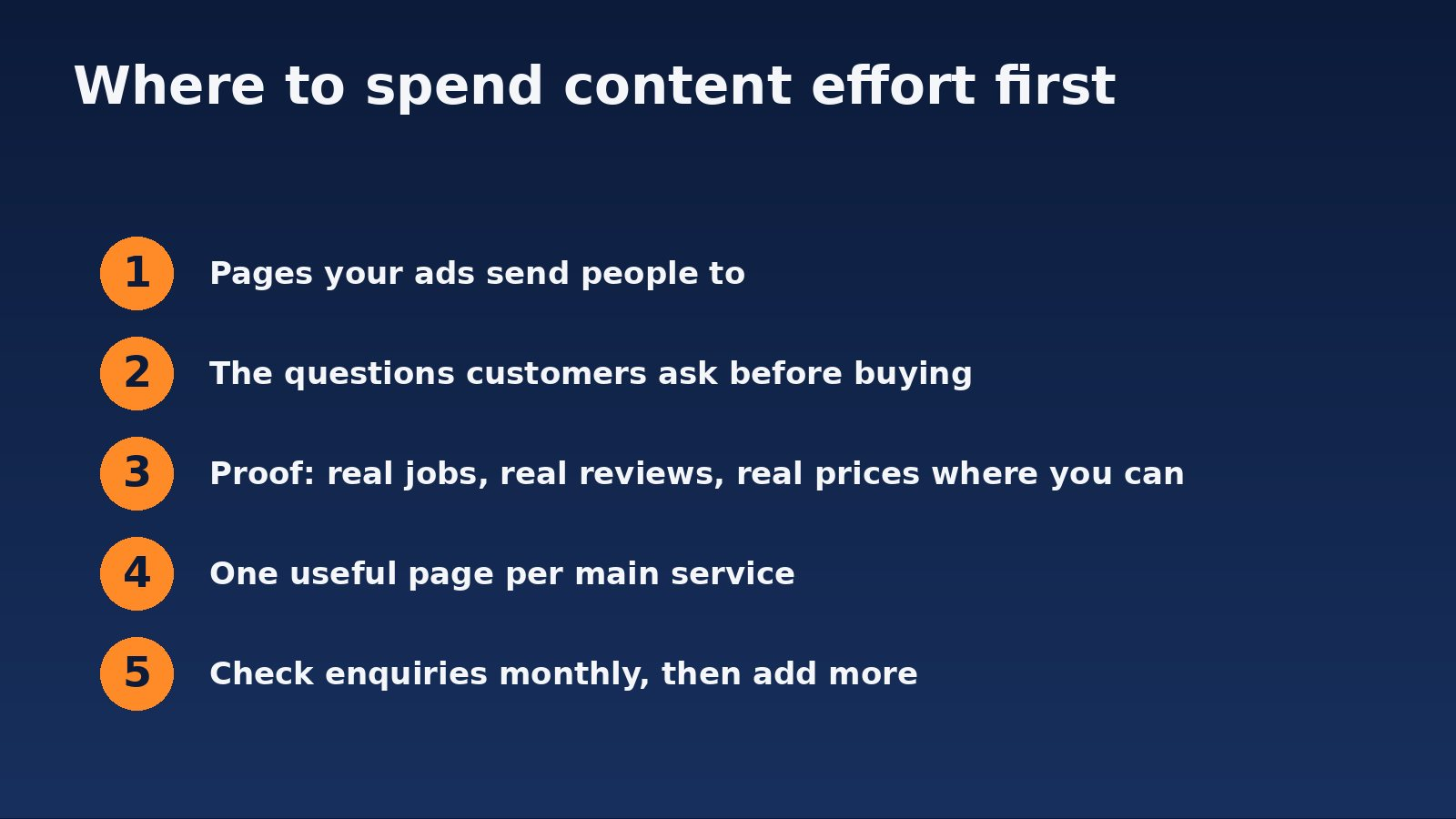
- Fix the pages your ads already send people to. This pays back fastest.
- Write down the ten questions customers ask before they buy, and answer the most common ones.
- Add one useful page per main service, with real proof.
- Review enquiries after a quarter, then decide whether to do more.
Want a second opinion?
We run Google Ads and build the pages they land on, so we’d rather tell you if your existing page needs work before you spend on anything new. See our services or read how we think about wasted ad spend to see where the leaks usually are.
Frequently asked questions
If my ads are working, do I need content?
Not urgently, but the page your ads land on is content, and improving it is usually the cheapest first step. Wider content is worth considering when your cost per enquiry rises or you depend entirely on paid clicks.
Can content replace my ads?
Rarely in the short term. Google’s 2011 pause studies found 89% of ad clicks were not replaced by organic clicks when ads were paused. That is vendor research and old, but it matches common sense: content is slower.
How long until content brings in enquiries?
Nobody can honestly give a date. Improved landing pages can lift enquiries from paid traffic within weeks. Content aimed at search results takes longer and varies by market.
How many posts do I need?
Fewer than you’ve been told. One strong page per main service plus answers to your customers’ most common questions beats dozens of thin posts.
Does better content lower my ad costs?
It can improve how Google rates your landing page, which Google says is part of how ad quality is judged. Google also says Quality Score is not itself an auction input, so don’t expect a guaranteed drop in cost per click.
Sources
- Incremental Clicks Impact of Search Advertising, Google Research, 2011 (vendor research)
- Google Ads Help: About Quality Score (vendor documentation)
- Google Ads Help: About Ad Rank (vendor documentation)
- Google Search Central: Creating helpful, reliable, people-first content (vendor guidance)
- DataReportal: Digital 2026 New Zealand (8 November 2025)
Want this run for your business?
Talk to our team. We will show you where the money is leaking and what we would do about it.