

It is a Thursday night and someone in Mt Roskill has just had their offer accepted. Settlement is in five weeks. They have never hired a removalist, they do not know anyone who has recently, and they are about to hand a stranger everything they own. So they pick up their phone, search “removalists Auckland”, and ring the first two or three businesses that look like they can be trusted.
If you run a removals or delivery business, that moment is the whole game. The customer is not browsing and they are not loyal. They need one reliable name, quickly. The business that appears, looks safe and answers the phone gets the job. The rest never find out the enquiry existed.
This guide is for owners of removals, courier and delivery businesses who want more booked jobs from online search. It covers where your customers look, what makes them trust you, how to set up Google properly for a business that travels to the customer, and how to tell whether the marketing is paying for itself.
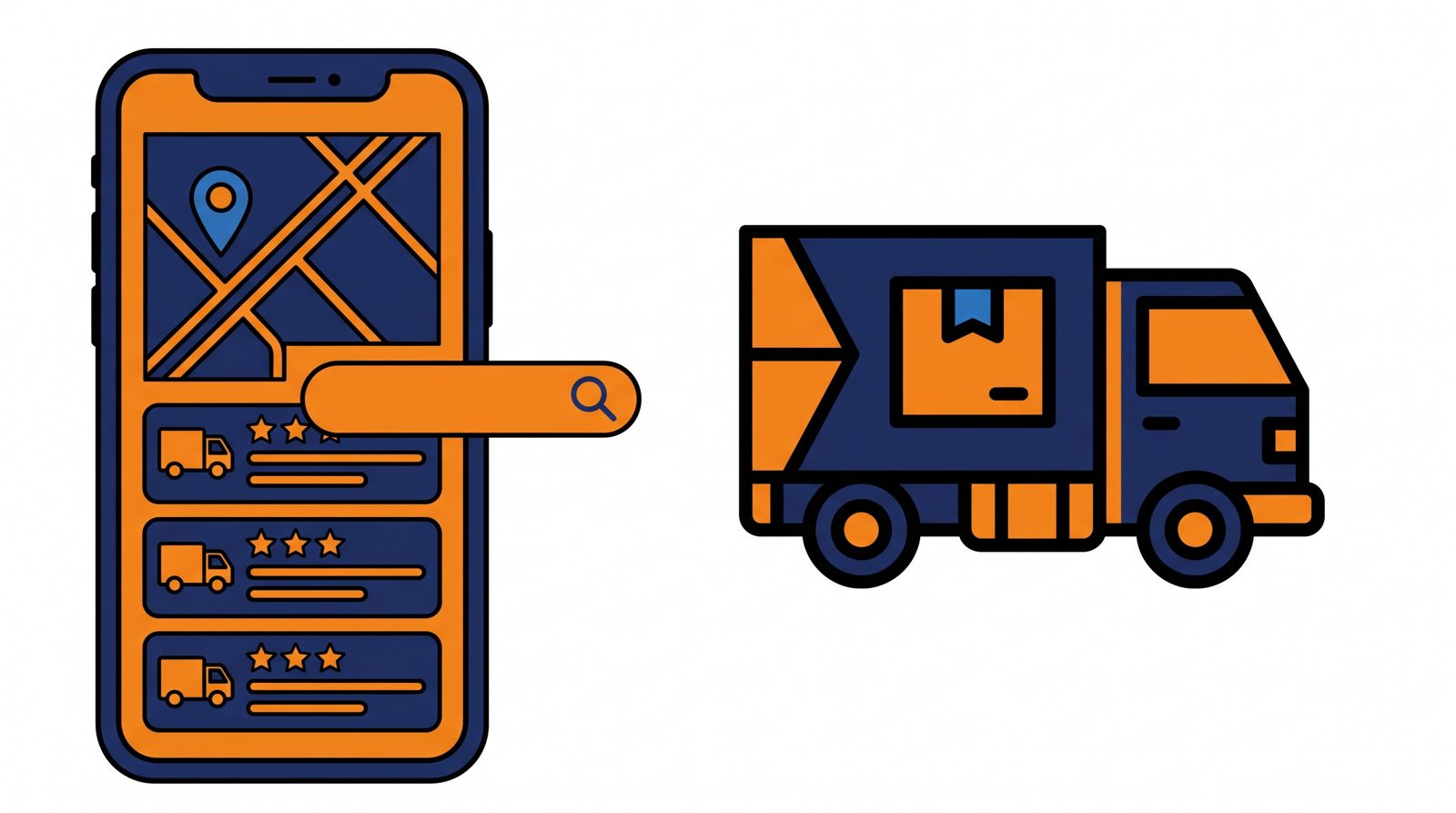
Your customers are online, on their phones, and in a hurry
You do not need a theory to know where to find people. DataReportal’s Digital 2026: New Zealand report (published November 2025) counted 5.06 million internet users, or 96.2% of the population, and 6.22 million mobile connections, equal to 118% of the population. In plain terms, nearly every household you could move is searching from a phone.
The demand behind those searches is not growing quickly. Stats NZ’s population estimates to 30 June 2026 show the population grew by 36,400 people (0.7%) over the year, to 5,357,300, with net migration of 17,600 making up 48% of that growth. Slower growth means fewer new arrivals needing a truck, and more removalists chasing the same households. That is why the businesses that get found first win a disproportionate share of the work.
What a moving customer is really deciding
A customer booking a move is not buying a truck and two people. They are deciding who they trust with their belongings and their moving day. That changes what your marketing has to do.
Three questions run through their head, whether or not they say them aloud:
- Are they real? Is there a proper business, a phone number that gets answered, and recent proof of jobs done?
- Will they look after my things? Are they insured, and will someone tell me how a damage claim works?
- What will it cost me? Not an exact figure, but enough to know the quote will not blow out on the day.
Your website and Google listing exist to answer those three questions in under a minute.
Reviews decide who gets the call
For a service where customers cannot try before they buy, reviews do most of the selling. The numbers from BrightLocal’s Local Consumer Review Survey 2026 (published February 2026, 1,002 US adults) show how demanding people have become:
- 97% read reviews for local businesses.
- 68% will only use a business with at least four stars, and 31% want 4.5 or better.
- 47% will not use a business with fewer than 20 reviews.
- 74% look only for reviews written in the last three months.
This is an American survey, not a New Zealand one, and your customers will not behave identically. But it is the best large, recent study of how people judge local businesses, and the direction is plain: a handful of old reviews is no longer enough.

Consumer NZ takes a more cautious line in its moving house checklist (30 January 2025). It tells people to get a few quotes, warns that “online reviews are easily faked and manipulated”, and says not to take a star rating as gospel. Its advice is to read three or four reviews and ask friends or community groups for first-hand experiences.
For you, that means two things. Reviews matter, and so does making yours credible: real names, specific details (“they carried the piano up two flights without a scratch”), and replies from you. A customer who is wary of fake reviews trusts a business that answers both the good and the bad ones.
The fix is a habit, not a campaign. Ask every customer on the day, while the move has gone well and they are standing in their new lounge. Send the Google review link by text the same afternoon. Ten minutes of admin a week is worth more than a month of ads.
Set up Google for a business that travels to the customer
A removalist is what Google calls a service-area business: one that, in Google’s words, “visits or delivers to customers directly but doesn’t serve customers at their business address.” There are rules worth knowing, set out in Google’s Business Profile help:
- You can set up to 20 service areas, based on cities, postal codes or similar areas, and not as a radius around your base.
- Google says the area “shouldn’t be more than about 2 hours of driving time” from your base.
- If customers do not come to your yard, remove your address from the profile.
- A business can only have one profile for the whole area it serves.
The practical point is to be specific. List the suburbs you really cover and want to win, not all of New Zealand, and keep the profile accurate: categories, hours, photos of your trucks and crew, and a phone number that is answered during your quoting hours.
Google Ads: fast, but only when the basics are right
If you need jobs on the books next month, paid search on Google is the quickest route. Someone typing “house movers near me” is about to book, which is why those clicks cost real money. A campaign that is sloppy burns budget on people who wanted a courier, a skip bin, a man-and-van for one chair, or a job in another city.
A well-run removals campaign does these things:
- Targets the suburbs and move types you want, such as 2 to 3 bedroom homes, office moves, or piano and bulky items.
- Blocks searches that signal the wrong customer, such as “jobs”, “DIY” and “truck hire”.
- Sends people to a page for the type of move they searched for, with a phone number and short quote form visible without scrolling.
- Counts phone calls as results, because most removals bookings begin with a call, not a form.
- Reports cost per booked job, not just clicks.

Your website’s job: turn a nervous visitor into a quote request
When someone lands on your site, they are asking the three questions from earlier. A good removals page answers them in plain language:
- What you move and where: homes, offices, apartments, local and long distance, with the areas you cover.
- How pricing works: hourly or by volume, what is included, and what could change the price. You do not need to publish a rate card, but you do need to remove the fear of a surprise.
- Insurance and claims: Consumer NZ notes that there is “no regulatory body that covers domestic moves in New Zealand”, so customers are relying on you to say what protection they have. Explain your transit cover and what to do if something is damaged.
- Proof: real photos of your crew and trucks, and real customer comments.
- An easy next step: a tap-to-call button and a short form asking for pick-up suburb, delivery suburb, size of move and date.

Courier and delivery businesses: a different buyer
Not every removals-style business is moving households. Couriers, last-mile delivery and freight operators win trade accounts, not one-off moves. Those buyers search for “same day courier Auckland” or “pallet delivery”, compare a few suppliers, and often want a named person and a reliable account. The marketing job is clearer service pages, proof of reliability and a fast quote or account-opening form, backed by follow-up. A business customer who stays for years is worth far more than a single job, so it is worth chasing properly.
What to measure and how long it takes
Ignore impressions and likes. Track four numbers:
- Calls and quote requests per month, split by where they came from (Google listing, ads, website).
- Cost per enquiry and, more importantly, cost per booked job.
- Quote-to-booking rate. If plenty of people ring and few book, the problem is price, answer speed or follow-up, not advertising.
- Review count and recency, month on month.
Paid search can bring enquiries within days of launching. Local search rankings and reviews take longer, typically a few months of consistent work, so treat them as an asset you build next to the ads, not a replacement.
How BeyondClix helps removals and delivery businesses
We run Google Ads and SEO for service businesses with the same focus: calls and booked jobs, not clicks. That means a Google Business Profile set up properly for a service area, ads aimed at the suburbs and move types you want, call tracking so you can see which ad produced which job, and a simple monthly report. Management fees are separate from ad spend, and your ad spend goes to Google on your own account.
If you are not sure whether your marketing is bringing in jobs, talk to us. We will tell you plainly what we would change first.
Frequently asked questions
How do customers find a removalist in New Zealand?
Mostly through local Google searches on their phone, then by comparing the top listings, star ratings and recent reviews before ringing two or three firms.
How many Google reviews does a removals business need?
There is no fixed number, but a 2026 US survey by BrightLocal found 47% of consumers will not use a business with fewer than 20 reviews, and 74% look for reviews from the last three months. Aim for a steady stream of recent ones.
Should a removalist show their address on Google?
If customers do not come to your premises, Google says to remove your address and set service areas instead. You can list up to 20 areas, and they should be within about two hours’ driving of your base.
Are Google Ads worth it for a removals business?
They can be, when the campaign targets the suburbs and move types you want and you track calls through to booked jobs. Without that tracking you cannot tell whether the spend is paying back.
How long does removals marketing take to work?
Paid search can produce enquiries within days. Local rankings and review volume usually take a few months to build.
Do couriers and delivery firms need different marketing from household movers?
Yes. Business buyers search differently, decide more slowly and value reliability and account service, so they need dedicated pages and a quick quote or account form.
Sources
- BrightLocal: Local Consumer Review Survey 2026 (published 11 February 2026; 1,002 US adults; US data, not NZ-specific)
- Consumer NZ: Moving house checklist, what to know before you go (30 January 2025)
- Google Business Profile Help: Service-area businesses (Google’s own guidelines)
- Stats NZ: National Population Estimates, at 30 June 2026 (released 18 August 2026; provisional)
- DataReportal: Digital 2026, New Zealand (8 November 2025)
All figures checked against these sources on 18 October 2026. US-sourced figures are labelled as such and are not New Zealand-specific.
Want this run for your business?
Talk to our team. We will show you where the money is leaking and what we would do about it.