

You know you “should be on social media”. So there is a Facebook page you post to when you remember, an Instagram account someone set up in 2021, a LinkedIn page with your logo on it and nothing else, and a nagging feeling you ought to be doing TikTok. Each one takes time. None of them has clearly brought in a customer. Most weeks it feels like shouting into a room nobody is in.
That is the most common social media situation we see in New Zealand businesses, and the fix is rarely “post more”. It is to stop trying to be everywhere. This guide covers which platforms New Zealanders actually use, why a big audience doesn’t mean anyone sees your posts, how to pick the one or two that suit your business, and how to tell whether it’s paying off.
Where New Zealanders actually are on social media
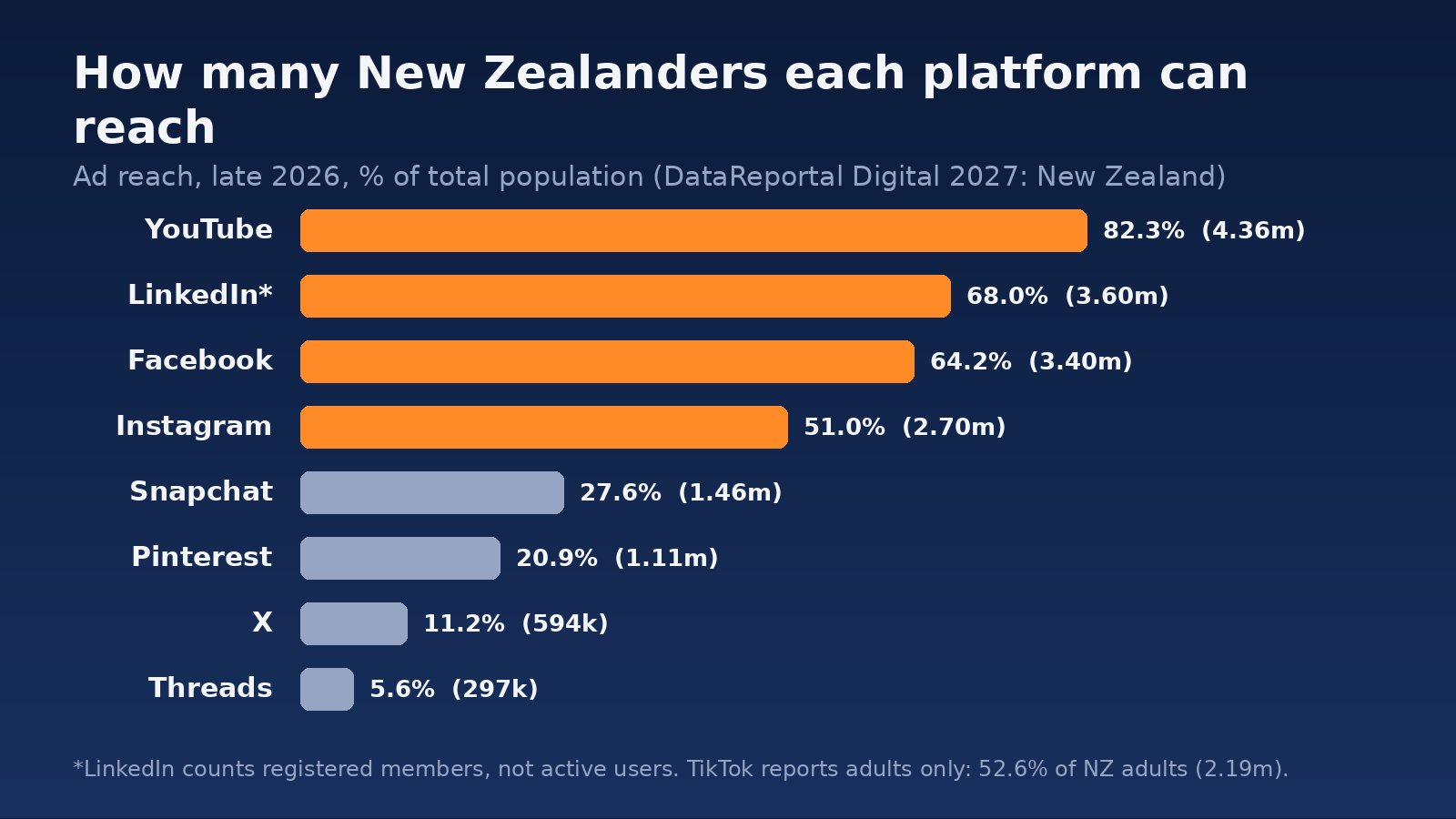
The most useful single source is DataReportal’s Digital 2027: New Zealand report, published on 5 November 2026. It puts New Zealand at 4.36 million social media user identities in October 2026, equal to 82.3 percent of the population. Among adults, it counts 3.81 million user identities, or 91.7 percent of everyone aged 18 and over. Those are “identities”, not unique people, since one person can hold several accounts. But the point stands: your customers are on social media, whoever they are.
The platform-by-platform figures come from each company’s own advertising tools, as reported in the same DataReportal study:
- YouTube: 4.36 million, or 82.3 percent of the population.
- LinkedIn: 3.60 million “members”. LinkedIn counts registered accounts, not active users, so this overstates how many people log in on a given week.
- Facebook: 3.40 million, or 64.2 percent of the population, and 81.8 percent of adults.
- Instagram: 2.70 million, or 51.0 percent of the population, and 62.6 percent of adults.
- TikTok: 2.19 million adults, or 52.6 percent of New Zealanders aged 18 and over. TikTok only reports its adult audience to advertisers.
- Snapchat (1.46 million), Pinterest (1.11 million), X (594,000) and Threads (297,000) trail well behind.
DataReportal is careful to say these are advertising reach figures, not monthly active users, and that platforms revise them often. Use them to compare platforms with each other, not as an exact headcount.
So should you be on all of them?
No. Facebook and YouTube reaching most of the country tells you those platforms are worth considering. It says nothing about whether your posts will be seen there. That’s a different question, and for most businesses it’s the one that matters.
A big audience doesn’t mean anyone sees your posts
Here is the part most social media pitches leave out. When you post to your business page, your followers don’t all see it. Each platform decides who sees what, and a business page competes with friends, family, creators and everything else.
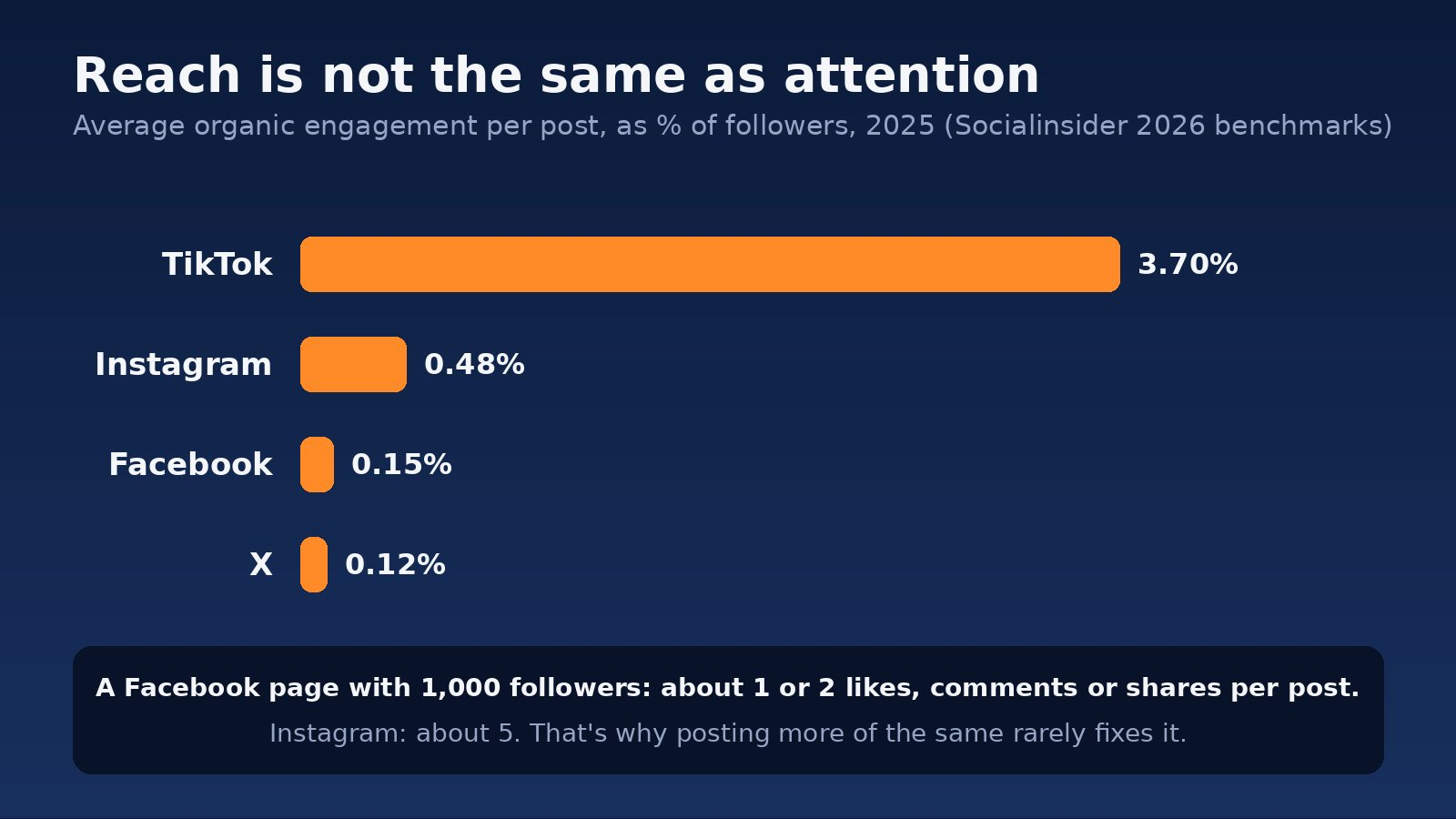
Socialinsider’s 2026 social media benchmarks, built from organic posts by more than a million brand accounts, show how little interaction a typical business post gets. Measured as likes, comments and shares divided by follower count, the average post in 2025 got:
- TikTok: 3.70 percent
- Instagram: 0.48 percent
- Facebook: 0.15 percent
- X: 0.12 percent
Put plainly: a Facebook page with 1,000 followers can expect one or two likes, comments or shares on an average post. On Instagram, about five. Those are global averages across all kinds of brands, not New Zealand-only figures, and your own numbers could sit above or below them. But they explain why so many owners feel nobody is listening. Mostly, nobody is being shown the post.
What the platforms say they reward
The platforms are fairly open about how they choose. Meta’s own explanation of how Instagram Feed ranking works says the system predicts how likely someone is to enjoy a post, how long they’ll spend on it, whether they’ll visit your profile afterwards, and how likely they are to share it with someone in a direct message. Posts it predicts will be more valuable are shown higher.
Read that list again from a business owner’s point of view. None of it rewards posting for the sake of it. It rewards posts people stop for, keep watching and send to a friend: “this is the builder I told you about”, “look at this place for Saturday”. A stock photo with “Happy Monday from the team!” fails every one of those tests.
How to choose: start where your buyers already are
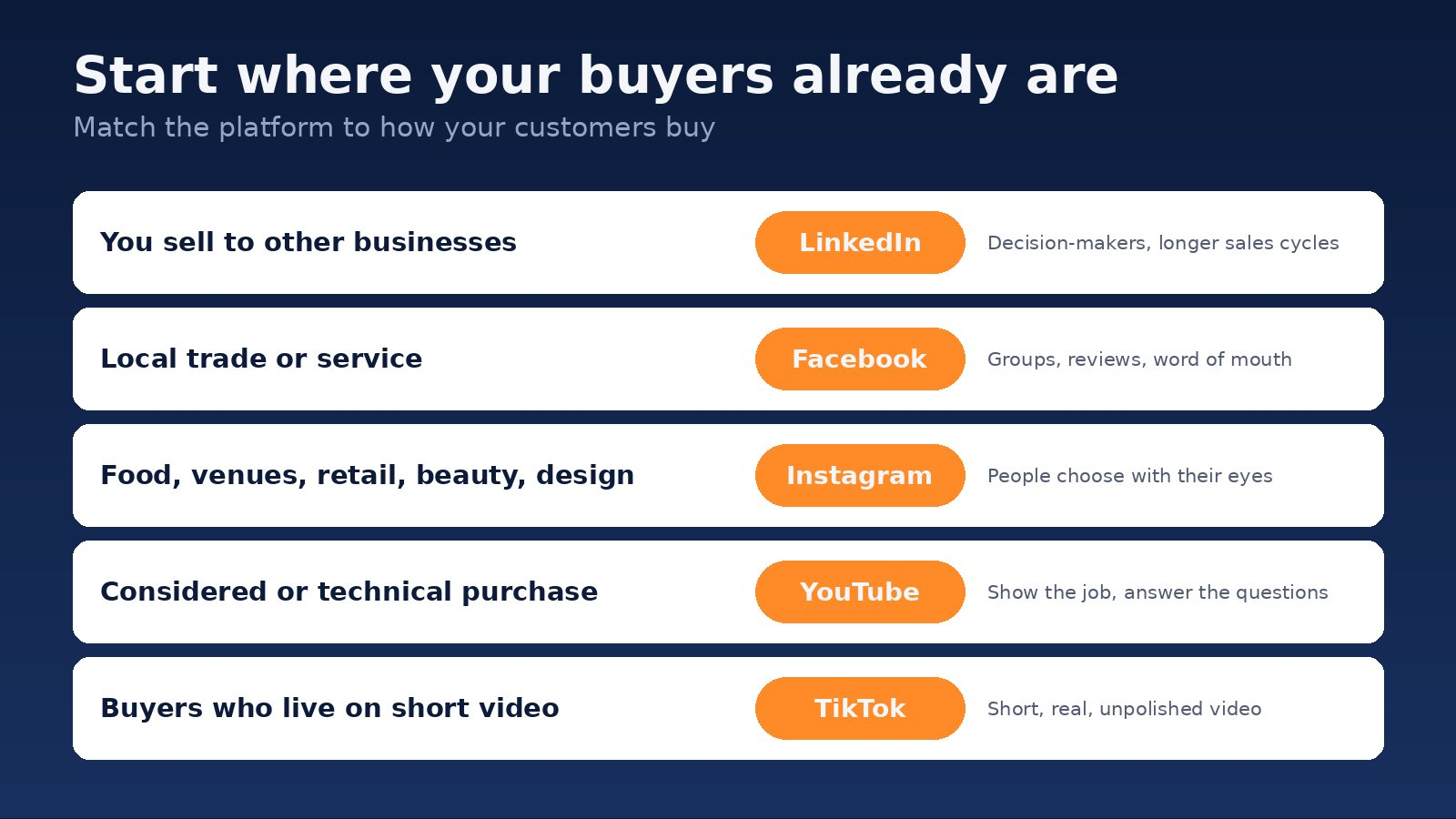
The right platform depends less on which one is biggest and more on how your customers make buying decisions. Here’s how we’d think it through for most New Zealand businesses.
You sell to other businesses: LinkedIn
If your buyer is an operations manager, a finance director or a business owner, LinkedIn is where they pay attention to work. It is not about going viral. It is about the right 200 people seeing you show up consistently with something useful. LinkedIn’s own Pages best-practice guide says pages with complete information get 30 percent more weekly views, and that companies posting weekly see a 2x lift in engagement. Those are LinkedIn’s figures about LinkedIn, so treat them as a guide. They point the same way as everything else here: fill in the basics, then show up regularly. If you’re weighing up paid LinkedIn too, our LinkedIn Ads guide covers it.
Local trade or service: Facebook
For plumbers, electricians, cleaners, builders, physios and anyone serving a set area, Facebook still does a job no other platform does. It reaches more than four in five New Zealand adults, and it’s where local community groups, recommendations (“can anyone recommend a good sparky in Howick?”) and reviews live. A tidy page with real photos of real jobs, your service area, and a quick reply when someone messages counts for more than posting five times a week.
Food, venues, retail, beauty and design: Instagram
If people choose you with their eyes, Instagram earns its place. Cafés, restaurants, salons, boutiques, interior designers and venues all sell something people want to see before they commit. Short videos and carousels of the actual dish, the actual room, the actual result tend to do the heavy lifting.
Considered or technical purchases: YouTube
YouTube reaches more New Zealanders than any other platform in the DataReportal data, and it’s underused by local businesses. If your product or service needs explaining, a two-minute video showing how a job is done, or answering the questions people ask before buying, keeps working for years. It’s also a search engine in its own right.
Buyers who live on short video: TikTok
TikTok reaches just over half of New Zealand adults and, in the Socialinsider benchmarks, gets far more interaction per follower than the others. It can work brilliantly for businesses that suit quick, real, behind-the-scenes video, and that have someone who enjoys making it. Polished corporate content tends to fall flat there. If nobody in your business would enjoy filming it, skip it rather than doing it badly.
What it costs: time or money, but not neither
Organic social media looks free. It isn’t. It costs time: planning, taking photos, writing, replying to comments and messages. For most small businesses, doing one platform properly takes a few hours a week. Doing four badly takes more, and achieves less.
So you have three realistic options:
- Do it yourself, on one platform. Cheapest in money, most expensive in your time. It works best when the owner or a team member genuinely enjoys it.
- Get help with planning and content, and keep the replies in-house. You stay the voice customers talk to. Someone else keeps the calendar full.
- Hand it over, and add a small paid budget. Because organic reach is so limited, many businesses get more from a modest paid boost behind their best posts than from posting more often. That turns social into something you can measure.
Whichever you choose, set the budget, in hours or dollars, before you start, and review it after three months. Social media rarely pays off in the first few weeks. If it hasn’t produced a single enquiry after a quarter of consistent effort, change the approach, not just the posting schedule.
How to tell if it’s working
Likes feel good, but they don’t pay wages. The question is whether social media leads to customers. Look at:
- Messages and enquiries that start on the platform. Count them each month.
- Website visits from social, and what those visitors do once they arrive. Your analytics will show this if it’s set up properly.
- “Where did you hear about us?” Ask every new customer. It’s low-tech and very revealing.
- Profile visits and shares. Platforms treat these as signs a post was valuable. They’re also early signs someone is weighing you up.
If you can’t yet tell which enquiries came from where, fix that first. Our guide to working out which marketing made the phone ring walks through it in plain terms.
And remember social media is usually the second place people check you out, not the first. Most New Zealanders still start on Google, as we covered in what NZ buyers are doing online. A neglected social page can still cost you, because people look at it before they call. A page that hasn’t posted since 2023 makes some people wonder if you’re still trading.
Where to start this week
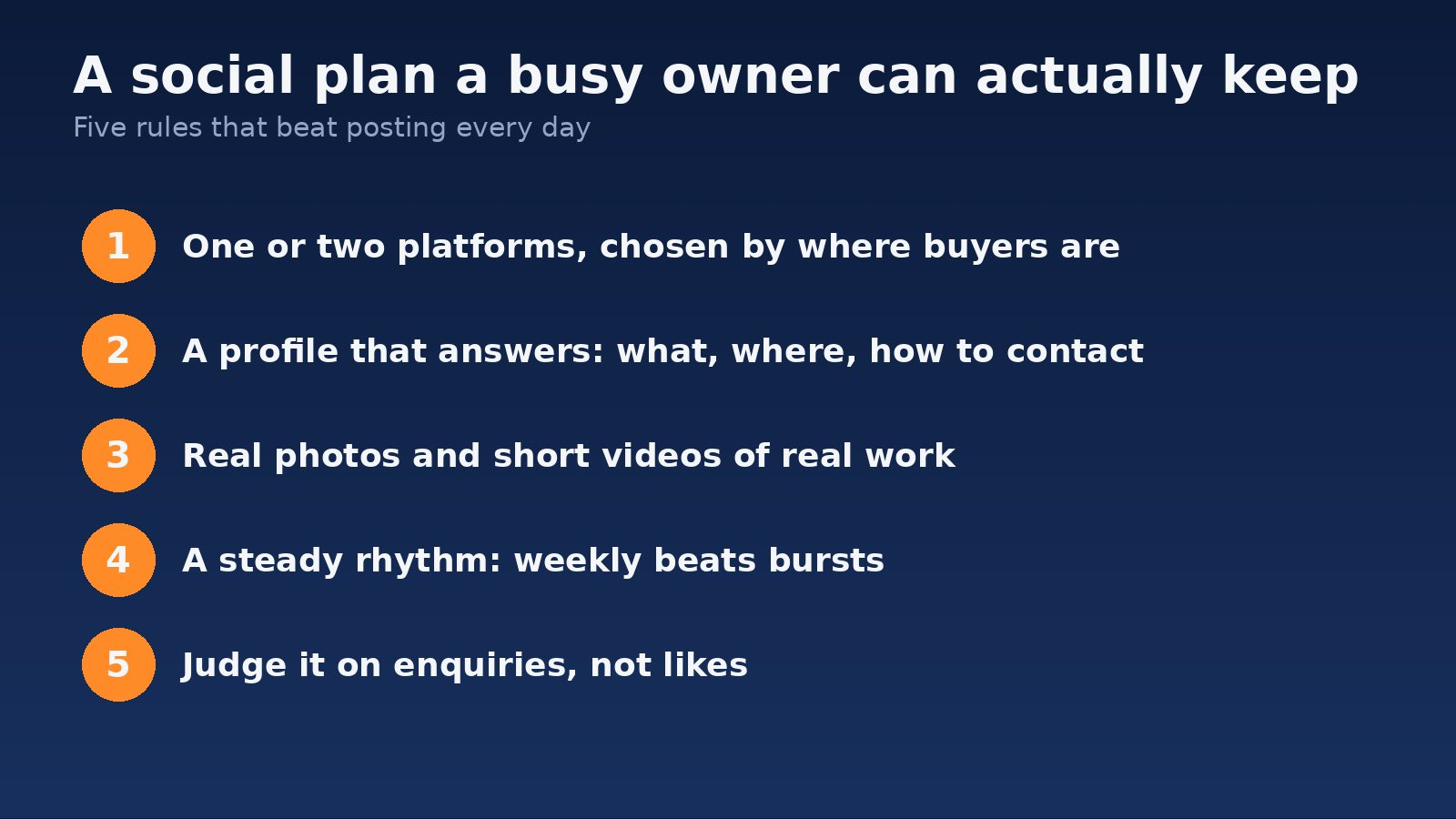
Pick one platform using the guide above. Fix the profile so it says what you do, where you do it and how to get in touch. Post one genuinely useful or genuinely real thing a week for the next three months, reply to every message within a day, and count the enquiries. Then decide whether to add a second platform, a small paid budget, or neither.
If you’d rather someone else handled the planning, the content or the reporting, have a look at our social media and digital marketing services. We’ll tell you honestly which platform is worth your time, even if the answer is “just one, and you can run it yourself”.
Frequently asked questions
How many New Zealanders use social media?
DataReportal’s Digital 2027: New Zealand report counts 4.36 million social media user identities in October 2026, equal to 82.3 percent of the population, and 3.81 million user identities aged 18 and over, or 91.7 percent of adults. Identities are not the same as unique people, since some people hold more than one account.
Which social media platform reaches the most people in New Zealand?
YouTube, with an advertising reach of 4.36 million, or 82.3 percent of the population, in late 2026. Facebook reaches 3.40 million, including 81.8 percent of adults, and Instagram 2.70 million. LinkedIn reports 3.60 million, but that counts registered members rather than active users.
Is Facebook still worth it for a small business in NZ?
For local trades and services, usually yes. It reaches more than four in five New Zealand adults and hosts local community groups and recommendations. Organic reach is low, though, so focus on a complete page, real photos of your work and quick replies rather than posting volume.
How often should a business post on social media?
Consistency matters more than volume. One useful post a week, kept up for months, will usually beat a burst of daily posts that stops after a fortnight. LinkedIn says companies that post weekly see twice the engagement, which is its own figure about its own platform.
How do I know if social media is bringing in customers?
Count enquiries and messages that start on each platform, check how many website visitors come from social and what they do, and ask every new customer where they heard about you. Likes and follower counts are not a reliable measure of sales.
Sources
- DataReportal: Digital 2027: New Zealand (5 November 2026)
- Socialinsider: 2026 Social Media Benchmarks (organic brand posts, engagement by followers, 2025 data)
- Meta Transparency Center: Instagram Feed AI system (vendor documentation)
- LinkedIn Marketing Solutions: LinkedIn Pages best practices (vendor documentation)
Want this run for your business?
Talk to our team. We will show you where the money is leaking and what we would do about it.